Promenade® bedding shrub rose – TRAgiheid
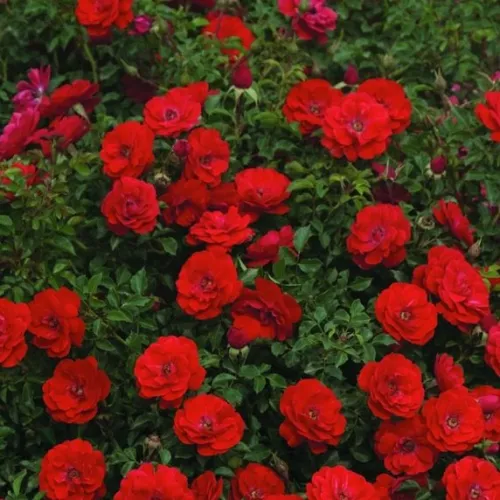
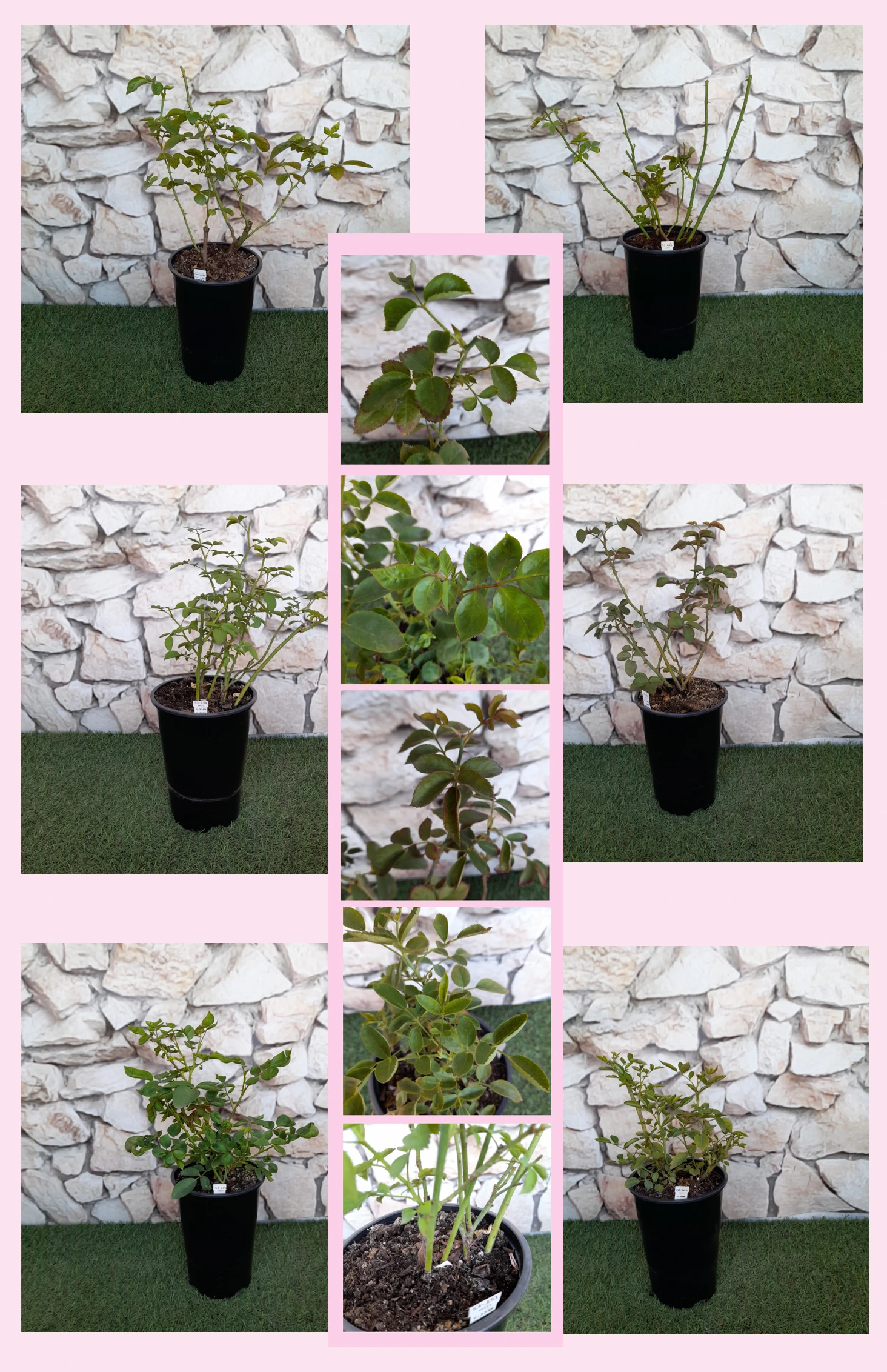
In a compact London front garden or balcony, Promenade brings a ribbon of fiery colour along paths and railings, its bushy habit designed for balance between impact and space. Masses of semi-double blooms repeat through the season, creating an easy walkway of orange-red to salmon-pink tones that bees can easily explore. Own-root growth means long-term stability, quietly regenerating from the base after pruning and weather knocks, well suited to frequently wet, breeze-prone conditions with heavy soil demanding thoughtful drainage. Over time it settles into a low, glossy shrub, ideal for rainwater-aware planting where run-off is slowed, edges are softened, and concrete is gently greened. Your 2-litre plant is a practical starting size for urban gardeners: roots first, then branching shoots, and by the third year a full display of colour that feels both intentional and sustainable.
Usage options
| Target area | Reasoning |
|---|
| Small front-garden flowerbed beside a path |
Low, bushy plants line a narrow path without overwhelming the space, giving repeated fiery colour at ankle height and a gentle sense of order along the approach to your door, ideal for the time-poor homeowner. |
| Rainwater-conscious urban planting strip |
Set slightly back from paving in improved, free-draining soil, this compact rose works with perennials to slow run-off and knit together a greener edge that copes with frequent showers and heavier downpours for the eco-minded city-dweller. |
| Pollinator-friendly patio container (40–50 litres minimum) |
In a generous pot with peat-free compost, its open-centred blooms give bees easy pollen access, while the neat size suits steps, roof terraces or patios, rewarding minimal deadheading for the relaxed balcony-gardener. |
| Informal low hedge along a front boundary |
Planted in a staggered line at hedge spacing, the dense foliage and repeat flowering create a defined yet friendly boundary that softens fences and railings without demanding complex pruning from the busy beginner. |
| Mixed border with cottage-style perennials |
Its fiery tones weave through softer planting, while own-root resilience means it quietly thickens up year by year, keeping its place among perennials with simple annual pruning suited to the long-term-focused gardener. |
| Family garden planting around seating areas |
Compact height keeps flowers at conversation level without blocking sight lines, and the very light fragrance avoids overwhelming small spaces, offering gentle colour and interest for the social family. |
| Gently sloping or slightly raised beds |
The slightly spreading habit and dense foliage help clothe low banks or raised beds, giving a soft, textural cover that looks considered rather than formal, appealing to the design-conscious urbanite. |
| Public-facing front garden for kerb appeal |
Clustered, repeating blooms and neat structure deliver reliable street-side impact; with basic spraying where needed and simple winter pruning, it remains attractive despite wind and rain for the image-aware householder. |
Styling ideas
- CITY RIBBON – Plant a narrow band of Promenade® along a short path, underplanted with Alchemilla mollis to catch raindrops and soften edges – ideal for design-conscious terrace owners.
- SOFT FLAME – Combine with Gypsophila repens and low grasses in a gravel strip, letting fiery blooms float above pale, airy companions – suited to low-fuss, modern front gardens.
- RAINGARDEN EDGE – Use in a raised, free-draining bed that takes roof run-off, mixed with Nepeta or dwarf sage to attract bees – perfect for sustainability-focused city dwellers.
- POCKET PATIO – Grow one shrub in a 40–50 litre container with trailing thyme around the rim for a compact, season-long accent – good for beginners with limited paving space.
- WALKWAY BLEND – Alternate Promenade® with lavender along a short front path, echoing promenade planting with scent and colour – appealing to home improvers seeking classic charm.
Technical cultivar profile
| Property | Data |
|---|
| Name and registration |
Promenade® Bedding rose TRAgiheid is a patio–shrub bed rose, registered as TRAgiheid, used mainly as a compact flowerbed shrub within bedding and small-scale landscape schemes. |
| Origin and breeding |
Bred by Christophe Travers at Pépinières Travers in France, with breeding completed in 2011; parentage is not recorded, and introduction and registration years are currently unavailable. |
| Growth and structural characteristics |
Low, bushy, slightly spreading shrub 30–50 cm high and 45–75 cm wide, with dense, glossy dark green foliage and moderate prickliness; forms a compact, edging-friendly mound. |
| Flower morphology |
Semi-double, flat, small flowers in clusters, typically 0.5–1.5 inches across, with 13–20 petals; remontant, with a strong second flush following the main early-summer flowering. |
| Colour data and phenology |
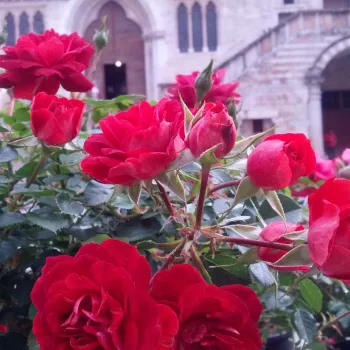
Vivid orange-red to red blooms (RHS 46A outer, 45A inner) open fiery, then soften through coral red to salmon-pink, retaining a rich sheen and warm orange shimmer in full bloom. |
| Fragrance and aroma |
Very light, classic rosy fragrance detectable only at close range, contributing gentle scent without dominating small, enclosed urban spaces or seating areas near the planting. |
| Hip characteristics |
Produces small numbers of spherical orange-red hips, around 6–10 mm in diameter, adding modest late-season interest and signalling successful pollination in wildlife-friendly plantings. |
| Resistance and winter hardiness |
Extremely hardy to approximately −26 to −23 °C (RHS H7, Swedish Zone 4, USDA 5b) but very susceptible to powdery mildew, black spot and rust, needing consistent preventive plant protection. |
| Horticultural recommendations |
Best in improved, well-drained soil with regular rose care and fungicide where needed; suitable for beds, borders, slopes and urban green spaces, tolerating partial shade and dense planting. |
Promenade® Bedding rose TRAgiheid offers compact, repeat fiery colour and pollinator-friendly blooms in small gardens, with own-root robustness for long-term planting; a thoughtful choice when refining your front garden or patio scheme.