QUEEN ELIZABETH – pink bedding grandiflora rose - Lammerts
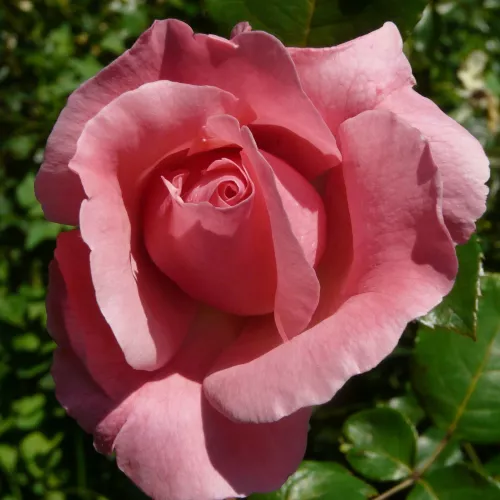
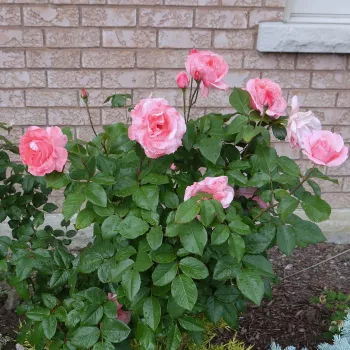
Step into the calm of a London front garden after rain with QUEEN ELIZABETH, a statuesque grandiflora that brings balance, poise and long-season colour to compact urban spaces while quietly coping with breezy, damp coastal weather. This classic, award-winning rose flowers generously in mid-pink clusters, giving a reliable display from early summer to autumn with only modest deadheading. Its upright, narrow habit suits small gardens, paths and hedging, creating a gentle sense of structure without crowding neighbouring plants. As an own-root plant it offers reassuring longevity, steady regeneration from the base and dependable shape over many years, even after harder pruning. In its first seasons it focuses on root strength, then builds taller shoots, and by the third year it delivers its full ornamental impact, settling into the garden as a mature, low-fuss presence.
Usage options
| Target area |
Reasoning |
| Narrow London terrace front garden |
The tall, upright habit makes strong use of limited ground space, giving vertical flower columns beside steps or paths while leaving room for permeable gravel and rainwater soakaway. Own-root vigour supports years of stable display for the busy urban gardener. |
| Low-maintenance flowering hedge |
Planted at 55 cm centres, QUEEN ELIZABETH forms an airy, flowering screen that defines front boundaries without feeling heavy. Moderate self-cleaning means only periodic deadheading, and own-root regrowth helps the hedge recover well from shaping cuts for the time-poor homeowner. |
| Statement specimen in a small lawn |
As a solitary rose at 100 cm spacing it rises like a soft pink column, providing height where trees would be too large. The dense, glossy foliage frames the blooms, and long-term structural reliability makes it a good anchor point in compact gardens for the design-conscious beginner. |
| Rainwater-friendly mixed bed |
Its tall stems and clustered flowers rise above perennials such as lavender, nepeta or sage, allowing underplanting with low, water-absorbing groundcover and mulches that aid drainage on heavier soils while reducing bare paving for the sustainability-minded gardener. |
| Cut-flower and exhibition rows |
The long, straight stems with cupped, double blooms suit cutting for vases and informal display. Regularly taking stems for the house naturally renews growth, and an own-root base maintains plant framework over many seasons for the hobby flower arranger. |
| Large container on step or balcony |
In a 40–50 litre peat-free container with regular watering, this rose provides a vertical curtain of bloom where soil is limited. Own-root resilience copes better with occasional drying or harder pruning, supporting a long-lived potted feature for the city balcony owner. |
| Wind-exposed, humid sites |
The upright structure and firm stems cope well with unsettled weather, while reasonable disease resilience, especially against black spot, reduces spraying needs in damp conditions, aligning with softer maintenance expectations for the eco-aware household. |
| Family garden play-friendly backdrop |
Planted towards the back of a border, its height lifts thorns and blooms away from main play areas while still providing colour and seasonal rose hips. The durable, own-root framework tolerates occasional accidental knocks from the young family gardener. |
Styling ideas
- Soft-Front-Formal – Line a narrow path with QUEEN ELIZABETH and lavender for a gently formal, scented approach that stays permeable and rainwater-friendly – ideal for terrace-house owners.
- Romantic-Hedge – Create a light pink boundary hedge, underplanted with low-growing thyme to soften edges and support bees – suited to families wanting charm with simple care.
- Balcony-Column – Grow one plant in a 50-litre pot with trailing nepeta spilling over the rim for vertical bloom and soft movement – perfect for renters or flat-dwellers.
- Prairie-Mix – Combine in a sunny bed with Echinacea and ornamental grasses so tall pink stems rise from a drought-aware, low-lawn alternative – for sustainability-focused gardeners.
- Evening-Feature – Place a specimen near a bench with silvery Artemisia and small solar path lights, so pearly pink flowers glow at dusk – for those seeking a calm, after-work retreat.
Technical cultivar profile
| Property |
Data |
| Name and registration |
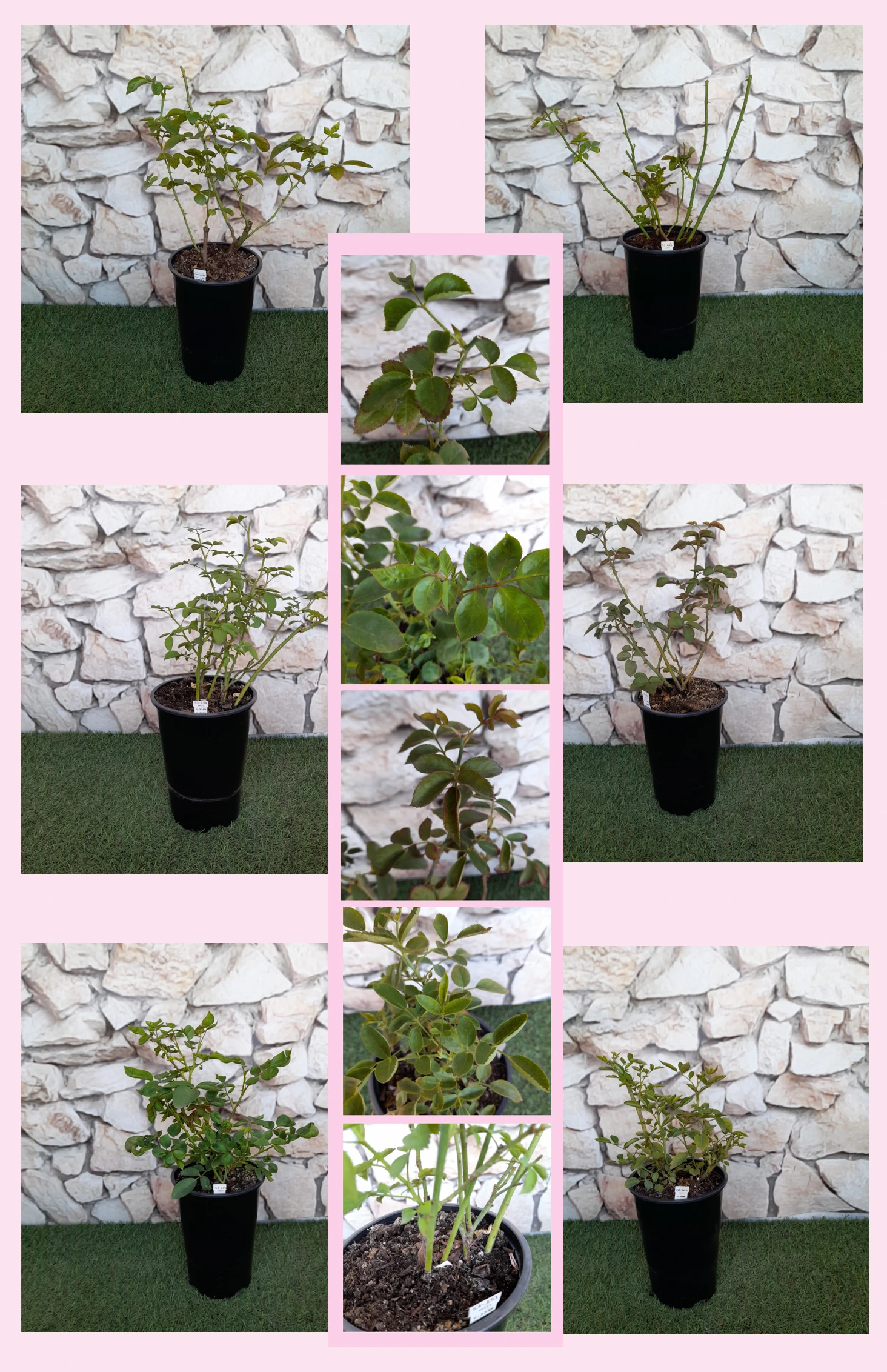
QUEEN ELIZABETH grandiflora bedding rose; ARS exhibition name ‘Queen Elizabeth’; group: grandiflora bed rose; own-root 2-litre eleanorROSE® ORIGINAL for consumer garden use. |
| Origin and breeding |
Raised by Walter Edward Lammerts, Armstrong Nurseries, California; cross of ‘Charlotte Armstrong’ × ‘Floradora’; bred 1951 in the USA; introduced in 1954 by Jackson & Perkins. |
| Awards and recognition |
Portland Gold Medal 1954; AARS winner 1955; ARS Gold Medal 1957; Golden Rose of The Hague 1968; WFRS Hall of Fame and World’s Favourite Rose 1979, reflecting long-standing global merit. |
| Growth and structural characteristics |
Strong, upright grandiflora growth to around 180–260 cm high and 70–110 cm wide; dense, glossy dark green foliage; moderately thorny stems; suited to hedging, bedding and specimen planting. |
| Flower morphology |
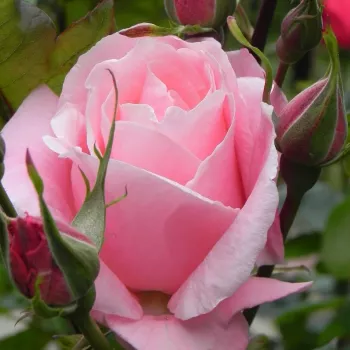
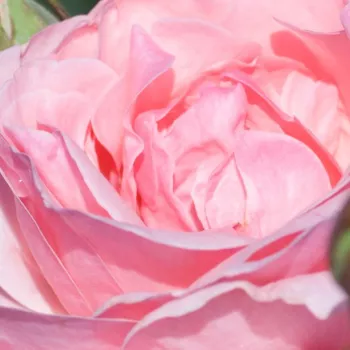
Large, cupped, double blooms with 26–39 petals, typically in clusters; remontant with a good second flush, providing repeated flowering through the season; flower size roughly 2.75–3.95 inches. |
| Colour data and phenology |
Mid-pink flowers with a soft silvery sheen; ARS mp, RHS 65B outer, 65C inner; buds deep pink, opening to pure pink, then fading to lighter pearly tones in strong sun; colour clearer in cooler weather. |
| Fragrance and aroma |
Fragrance is mild and restrained, with a delicate sweet rose character that does not overpower sitting areas or windows; best appreciated at close range in still evening air rather than for strong perfume. |
| Hip characteristics |
Produces moderate numbers of small, ovoid hips around 12–18 mm across, coloured orange-red; hips add subtle late-season ornamental interest and suit more naturalistic or less heavily deadheaded gardens. |
| Resistance and winter hardiness |
Hardy to approximately −26 to −23 °C (RHS H7; Swedish zone 4; USDA 5b); disease resistance moderate overall, showing good black spot resistance with some susceptibility to powdery mildew and rust. |
| Horticultural recommendations |
Best in full sun with well-drained soil; water during extended dry spells; space 55–100 cm depending on hedge or specimen use; suitable for large containers of at least 40–50 litres in peat-free compost. |
QUEEN ELIZABETH offers tall, elegant structure, long-season flowering and dependable own-root longevity, making it a thoughtful choice for enduring, low-fuss beauty in compact family gardens.