RAABS™ – yellow dwarf mini rose - Olesen & Olesen
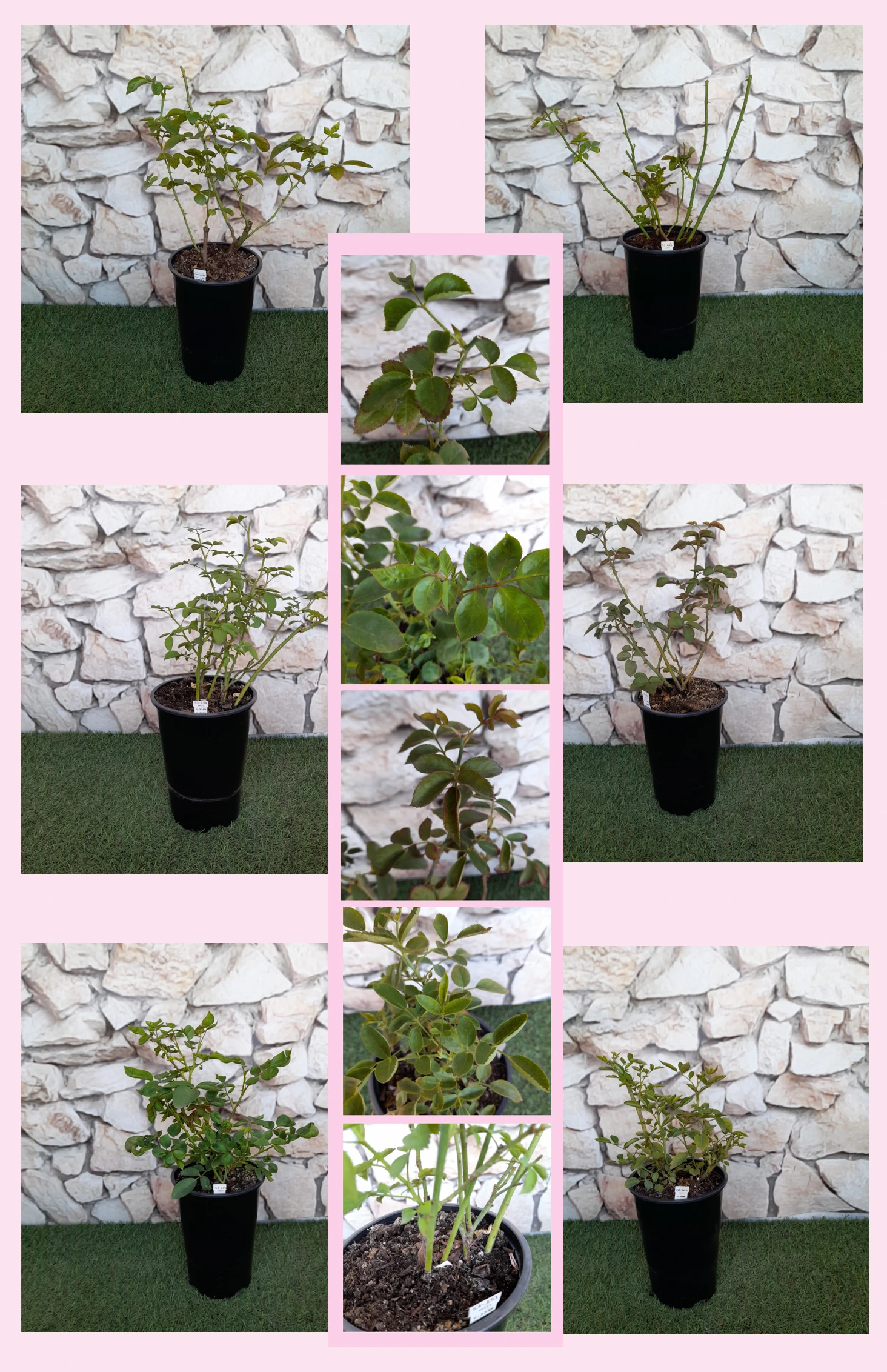
In a compact London front garden or balcony, Raabs offers cheerful colour with little effort, thriving even where wind and rain test small spaces and rewarding consistent, simple care. Its naturally bushy habit stays neat without intricate pruning, while glossy foliage frames waves of yellow blooms from early summer well into autumn. As an own-root rose it builds long-term resilience, quietly regenerating from the base if stems are damaged, so you avoid the worry of graft failures and complicated replacement. In the first year it focuses on underground roots, the second year brings stronger shoots, and by the third season you enjoy full ornamental impact in a sustainable, low-fuss urban garden.
Usage options
| Target area |
Reasoning |
| Terraced-house front garden, small bed by the path |
The dwarf habit and dense framework form a tidy edging that does not overwhelm narrow borders. Own-root durability means the line of plants stays even over many years with only light annual trimming, ideal for a low-input front garden for the beginner. |
| Balcony or patio container, 40–50 litre planter |
Compact height and naturally bushy growth make this cultivar easy to manage in a substantial pot, where roots have enough space and stability. Its gradual, long-season flowering keeps a balcony colourful without complicated pruning for the urban-dweller. |
| Rainwater-friendly urban planting with good drainage |
This rose copes reliably with exposed, wet sites if the soil or planter drains freely, so it suits front gardens that collect roof run-off or use stored rainwater. Minimal fuss beyond sensible watering and feeding keeps it thriving for the sustainability-minded. |
| Low hedge or edging along a driveway or path |
Neat, uniform plants at 25–30 cm spacing create a small-scale hedge that keeps its shape without frequent clipping. Repeated flowering along the line gives a long-lasting band of colour that stays attractive for the time-pressed. |
| Mixed border with perennials in family gardens |
Clustered, medium-sized blooms provide warm yellow highlights among perennials, while the dense, glossy foliage fills gaps at the front of the border. Reliable rebloom supports a stable display through the main season for the homeowner. |
| Coastal or windy suburban sites |
The robust framework and moderate height help it withstand breezy, exposed locations, where taller roses might rock or break. Its confirmed heat tolerance also supports performance through warm spells for the coastal-gardener. |
| Family garden spaces used by children and pets |
Its low stature keeps most thorns below eye level, and self-cleaning flowers drop petals cleanly, reducing deadheading chores. This supports a tidy, colourful play-side border without constant maintenance for the busy-parent. |
| Small-scale urban mass planting or pocket park |
Regular, remontant flowering and an even dwarf form make it suitable for repeated planting in beds or public-style schemes, maintaining a coherent look over time. Own-root plants recover well if stems are damaged for the community-gardener. |
Styling ideas
- Sunlit Edge – line a narrow front path with Raabs and low-growing sweet alyssum to create a scented, golden border – ideal for terrace-home owners wanting quick impact.
- Balcony Jewel – plant several Raabs in a 50-litre container with trailing lobularia to spill over the rim – perfect for city dwellers seeking easy colour in limited space.
- Pocket Hedge – set a row along a driveway, interplanted with hardy geraniums for soft, informal underplanting – suited to families wanting neat structure without formal clipping.
- Mini Meadow – group Raabs in a sunny square bed, dotted with Agastache ‘Blue Fortune’ for yellow–blue contrast – good for hobby gardeners redesigning a small front garden.
- Courtyard Calm – combine Raabs in large planters with compact grasses for a simple, modern look – appealing to busy professionals preferring low-maintenance, contemporary planting.
Technical cultivar profile
| Characteristic |
Data |
| Name and registration |
Patio rose from the Palace® collection; registered as POUlpal102 and marketed as Raabs™ Palace®. Miniature, dwarf type suited to pots and small beds; verified premium gold quality for garden use. |
| Origin and breeding |
Bred in Denmark in 2021 by L. Pernille Olesen and Mogens Nyegaard Olesen for Poulsen Roser A/S. Introduced after 2022, with EU and US protection confirming its recent, modern breeding. |
| Growth and structural characteristics |
Dwarf, bushy plant 22–38 cm high and 30–50 cm wide, with dense, dark green glossy foliage and moderate thorns. Naturally compact framework keeps its shape with minimal pruning in small gardens. |
| Flower morphology |
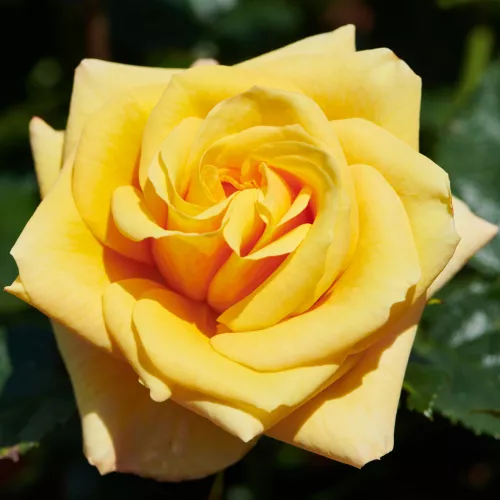
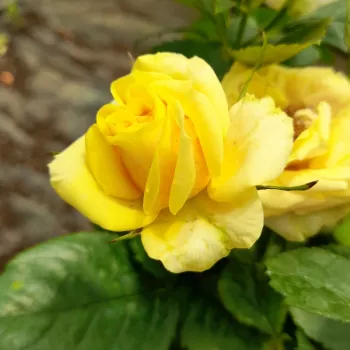
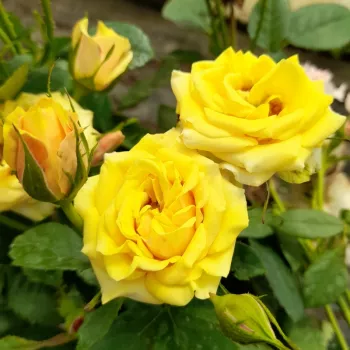
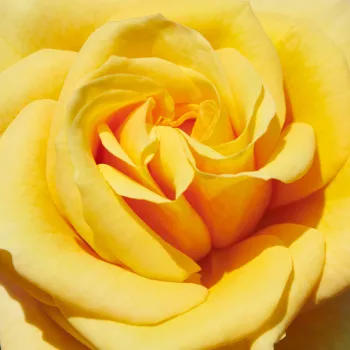
Medium-sized, fully double, cup-shaped blooms in clusters, with around 26–39 petals. Free-flowering and remontant, giving a strong second flush that maintains showy display through the season. |
| Colour data and phenology |
Rich golden yellow flowers, RHS 12A outer and 14B inner tones. Buds open deep yellow, then fade gradually to pastel yellow with creamy edges, providing a soft, evolving colour effect on the plant. |
| Fragrance and aroma |
Very weakly scented with a light, airy character; chosen primarily for colour and plant habit rather than perfume. Suits sites where fragrance is not essential or where visual effect is the priority. |
| Hip characteristics |
Occasionally forms very small, 0–4 mm hips that are visually unobtrusive and have no significant ornamental value, so spent flowers appear clean once petals have fallen. |
| Resistance and winter hardiness |
Rated H7 and hardy to about −21 to −18 °C, USDA 6b. Good overall disease resistance with strong black spot and rust resistance and moderate powdery mildew tolerance under garden conditions. |
| Horticultural recommendations |
Best in full sun in beds, borders or containers, with medium maintenance and occasional plant protection. Space at 25–45 cm depending on use, and ensure regular watering in prolonged dry periods. |
RAABS™ offers compact golden colour, neat long-season flowering and resilient own-root reliability, making it a thoughtful choice for sustainable small gardens and balconies where space and time are both limited.