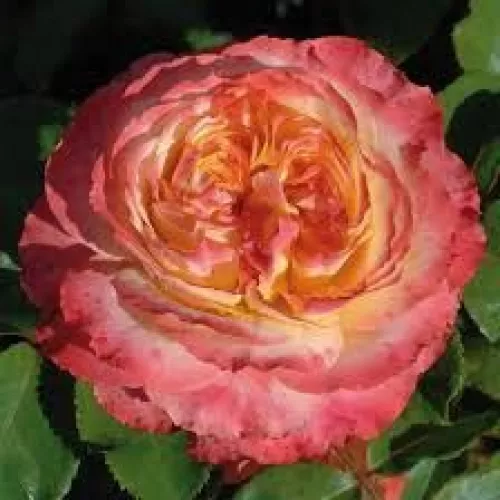
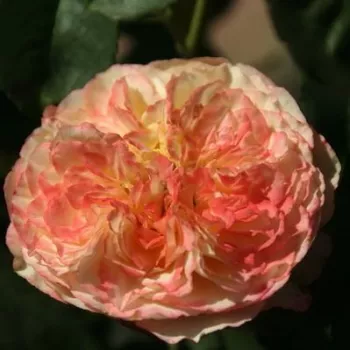
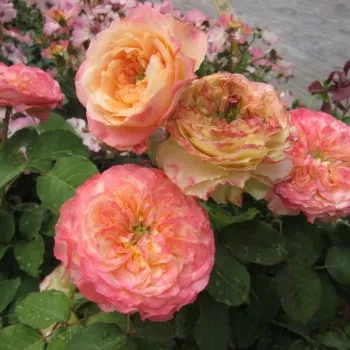
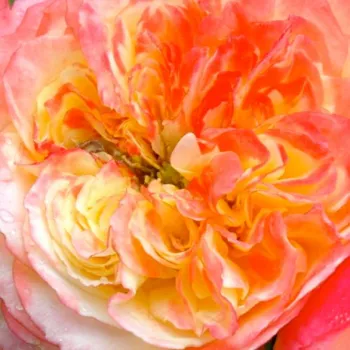
ROS'ODILE™ – yellow-pink flower-bed shrub rose
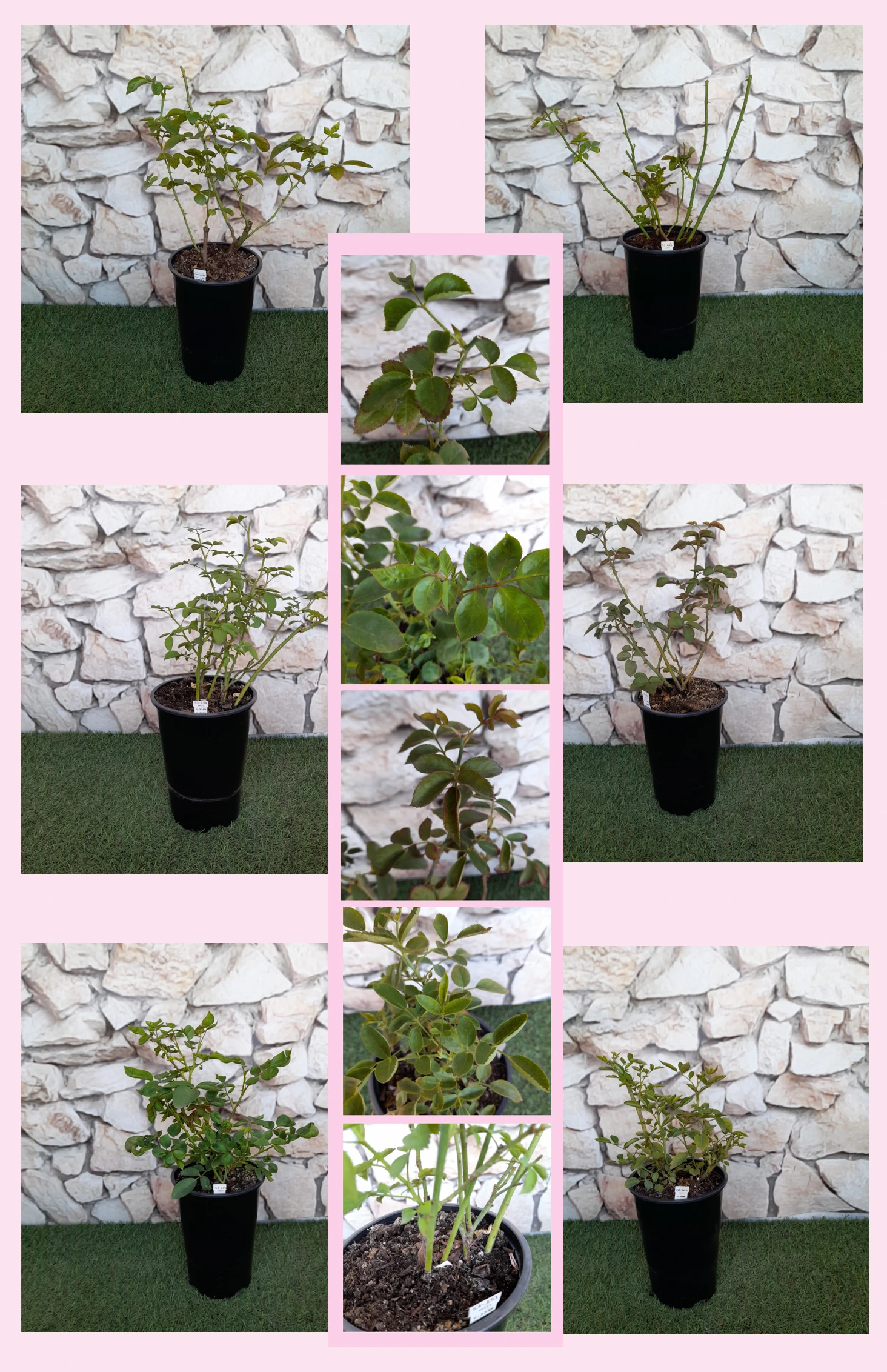
Step into a London front garden after rain and imagine a narrow path edged with balance, where clusters of warm apricot-yellow blooms soften to blush pink above glossy green foliage. Ros’Odile™ forms a naturally bushy, upright structure, ideal for smaller urban plots that still face strong wind and wet weather, helping it cope reliably with typical British rainfall and heavier soils. As an own-root rose it supports long-term longevity in the family garden, regenerating well from the base so you can prune with confidence. Planted in a good-sized container of at least 40–50 litres or directly into improved clay, it settles quickly, with roots strengthening in the first year, more top growth and flowering in the second, and a full, balanced display by the third season. Its very full, cupped blooms lend a softly romantic look to sustainable planting schemes, while moderate maintenance needs and sound disease resilience keep care simple for busy home gardeners seeking calm, low-effort colour.
Usage options
| Target area |
Reasoning |
| Front garden feature shrub |
The bushy, upright habit (around 100–140 cm) makes Ros’Odile™ an easy focal point near a door or bay window, bringing long-season colour without dominating small spaces; ideal for busy homeowners who prefer uncomplicated structure, especially beginners. |
| Flower bed in family garden |
Its dense branching and 70–90 cm spread fill borders quickly, giving a rounded, cohesive look that sits well with perennials and low grasses, while own-root growth supports long-term shaping in a child- and pet-friendly garden for relaxed families. |
| Urban rainwater-conscious planting |
Performs well in typical town conditions, coping with unsettled weather and wet spells, making it a steady choice where surfaces shed water towards planting beds, suiting those designing practical, climate-aware front gardens and driveways for city-focused owners. |
| Large container on terrace or balcony |
In a 40–50 litre or larger pot, its compact yet substantial framework and repeat flowering create a soft, “girly” balcony presence with minimal pruning, ideal for renters and terrace gardeners wanting lasting colour from a moveable planting for urban residents. |
| Low informal hedge |
Planted 55 cm apart, Ros’Odile™ forms a low, romantic boundary with overlapping yellow-pink clusters, giving privacy without heaviness and remaining manageable with simple annual trimming, well suited to front paths and property lines maintained by time-pressed householders. |
| Mixed border with perennials |
Its soft apricot-to-pink colour shift blends elegantly with nepeta, lavender or sage, providing a refined backdrop that matures steadily as roots establish, shoots build and flowering peaks over the first three years, reassuring long-view garden planners. |
| Wildlife-aware ornamental bed |
Although heavily double flowers limit nectar access, the moderate set of small red hips adds seasonal interest and some wildlife structure in autumn, fitting gardeners who balance ornamental priorities with gently supportive habitats for local nature. |
| Low-maintenance park and communal planting |
Moderate disease resistance, especially strong black-spot tolerance, and a tidy, glossy-leaved bush reduce intervention, making it useful for lightly tended beds that still need to look welcoming and cared-for, supporting grounds managed by resource-conscious communities. |
Styling ideas
- Romantic-terrace – Combine Ros’Odile™ in a 50 litre clay pot with trailing nepeta and soft pink diascia for a pastel, “girly” balcony corner – ideal for flat dwellers seeking gentle evening colour.
- Front-hedge – Plant a loose row along a short London front path, underplant with low thyme to soften paving edges – suited to homeowners wanting charm without complex clipping.
- Cottage-ribbon – Weave between clumps of lavender and common sage in a narrow bed, echoing Provençal tones while staying compact – good for small-garden owners craving a classic look.
- Urban-rain – Set in a gravel-mulched strip by the drive with moisture-tolerant perennials, letting rainwater soak into improved soil – perfect for eco-minded drivers redesigning paved fronts.
- Family-island – Use as the central shrub in a lawn island with low grasses and alliums, giving year-on-year structure without fussy pruning – helpful for families wanting a simple focal bed.
Technical cultivar profile
| Parameter |
Data |
| Name and registration |
Shrub rose from the Les Provençelles® collection; registered as MASdile, marketed as Ros'Odile™ Les Provençelles® MASdile, classified as a flowerbed shrub within the bed rose commercial group. |
| Origin and breeding |
Bred in France in 2011 by Dominique Massad from ‘Monique Lestournelle’ × ‘Emilien Guillot’; introduced via Pétales de Roses and Les Chemins de la Rose, representing modern French shrub breeding. |
| Growth and structural characteristics |
Bushy, erect shrub reaching 100–140 cm in height and 70–90 cm spread; forms a dense, moderately thorny framework with glossy mid-green foliage, suitable for borders, hedges and specimen use. |
| Flower morphology |
Very full, cup-shaped blooms with over 40 petals, medium-sized at 1.5–2.75 inches, borne mainly in clusters; remontant with a generous second flush providing recurrent seasonal display in beds. |
| Colour data and phenology |
Yellow-pink bicolour with ARS yb; RHS 14B outer, 36C inner; buds open warm apricot-yellow with green centre, then outer petals blush pink and the whole bloom softens to a delicate, pastel-toned pink. |
| Fragrance and aroma |
Holds a discreet, very weak scent with a light fruity character; fragrance is barely noticeable in most garden situations, so planting is recommended for visual effect rather than aromatic impact. |
| Hip characteristics |
Produces moderate numbers of small, spherical red hips, around 10–14 mm in diameter; hips add subtle late-season interest without significantly affecting the plant’s compact, ornamental presentation. |
| Resistance and winter hardiness |
Hardy to approximately -21 to -18 °C (RHS H7, USDA 6b, Swedish zone 3); moderate overall disease resistance with black spot resistance and moderate susceptibility to powdery mildew and rust. |
| Horticultural recommendations |
Best in full sun with improved, free-draining soil; water during prolonged dry spells; suitable for flowerbeds, parks, specimen planting and urban green spaces, with medium maintenance and occasional protection. |
Ros'Odile™ offers long-season colour, a compact, bushy habit and reliable resilience in an own-root form that matures gracefully, making it a considered choice for enduring, low-fuss planting.