ROSA HARISONII – yellow historic old garden rose - Harison
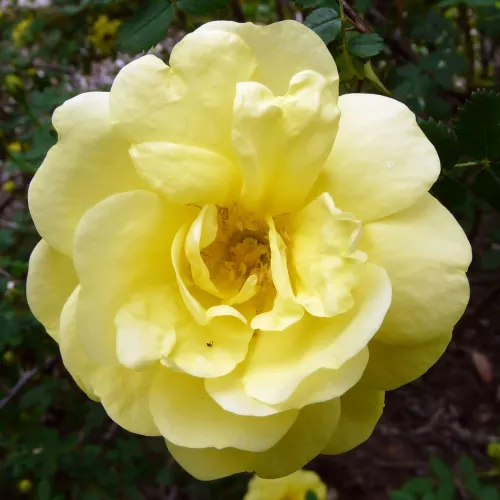
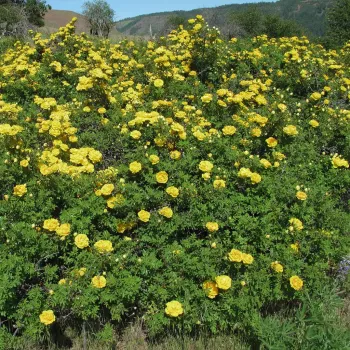
Step out to meet an early-summer rose that turns even a small London front garden into a moment of calm, with bright, butter-yellow blooms floating above cool grey-green foliage and coping steadily with blustery showers and moisture-retentive clay after heavy rain. This historic shrub settles in reliably on its own roots, building a discreet network below ground that supports decades of healthy growth, gentle balance and effortless structure. Once established, it needs little watering, shrugging off dry spells with quiet resilience, while its semi-double flowers open wide to offer pollen-rich centres that reward visiting bees with dependable nectar. A single, generous flush creates a soft, romantic hedge or specimen that cleans itself neatly, so there is less dead-heading and more time simply to enjoy the scene. Planted in a peat-free mix and watered mainly from your butt, this own-root rose will move through its natural rhythm of strong roots in year one, confident shoots in year two and full ornamental character by year three, making it a quietly satisfying choice for sustainable gardens.
Usage options
| Target area |
Reasoning |
| Front-garden specimen in small to medium family plots |
The upright, bushy habit and sunshine-yellow flowers create instant presence without overwhelming a modest space, and the plant naturally holds its shape with minimal pruning, suiting time-poor city homeowners and beginners. |
| Informal hedge along a path or boundary |
Regular height and spread, plus good self-cleaning, make it ideal for a soft, flowering hedge that needs only occasional shaping, while the dense prickles gently discourage shortcut traffic for safety-conscious families. |
| Low-input, drought-aware front garden |
Once established it tolerates heat and moderate drought, so under a gravel mulch and rainwater from a butt you can keep irrigation light, appealing to eco-minded urban gardeners managing bills and resources. |
| Clay or heavier-soil family gardens |
Its robust root system copes well where soil holds moisture after rain, provided you add grit and organic matter for drainage, reassuring those with heavy ground who still want reliable shrubs and colour. |
| Pollinator-friendly urban planting |
Semi-double, cup-shaped blooms with exposed stamens invite bees, adding early-season forage while remaining easy to live with, an attractive blend for balcony-edge beds and doorstep planters chosen by wildlife-lovers. |
| Naturalistic slope or bank planting |
The arching, thorny framework and moderate suckering help knit soil together, giving a relaxed, meadow-edge feel with modest maintenance, a good match for those taming awkward corners and garden slopes. |
| Mixed historic border with perennials |
Its once-a-year, concentrated flush of yellow pairs beautifully with lavender, sage or nepeta, adding structure that remains attractive after flowering, pleasing gardeners who value seasonal drama and traditional style. |
| Long-term, low-replacement family planting |
As an own-root historic rose it rejuvenates from the base and avoids graft failures, supporting decades of use in the same spot with only light renewal pruning, ideal for planners seeking enduring garden value. |
Styling ideas
- Yellow-Front Calm – Place as a single specimen by the front gate with underplanting of soft grasses to frame the sunny flowers – ideal for busy homeowners wanting impact from the pavement.
- Historic-Hedge Walk – Run a loose hedge along a narrow path, interplanting with lavender for scent and bees – suits families who like a romantic feel without intricate clipping.
- Clay-Garden Glow – On heavier soils, combine with nepeta and hardy geraniums for a billowing, forgiving mix – good for gardeners working with inherited, moisture-holding London plots.
- Pollinator-Patch – Group several plants with alliums and obedient plant to give a long pollinator season – perfect for sustainability-focused urban gardeners building small wildlife corridors.
- Sloping-Meadow Edge – Dot along a sunny bank with Liatris and ornamental grasses for a relaxed, natural look – appealing to those softening awkward changes of level in family gardens.
Technical cultivar profile
| Characteristic |
Data |
| Name and registration |
Historic shrub rose from the Old Rose group, traded as Rosa Harisonii and Harison’s Yellow; an unregistered variety widely known under its long-established historic commercial name. |
| Origin and breeding |
Bred in the United States around 1824 by George Folliott Harison from Rosa foetida ‘Persiana’ × Rosa spinosissima, introduced to gardens circa 1830 and now regarded as a classic historic yellow shrub. |
| Growth and structural characteristics |
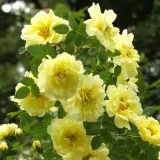
Bushy, upright to slightly arched shrub, typically 130–230 cm high and wide, with moderately dense, matt grey-green foliage and dense prickling, forming a substantial, eye-catching framework in time. |
| Flower morphology |
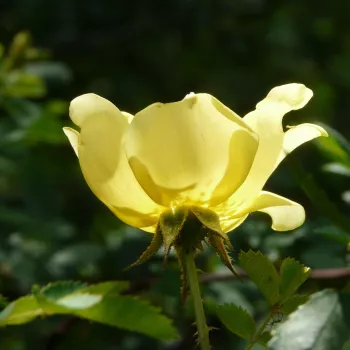
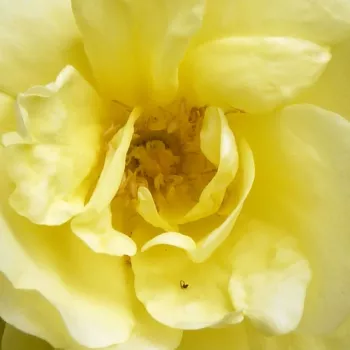
Semi-double, medium-sized, cup-shaped blooms with around 13–25 petals, usually borne singly; a non-remontant rose providing one abundant early-summer flush, after which most spent flowers drop cleanly. |
| Colour data and phenology |
Closed buds deep golden yellow opening to intense lemon-yellow, settling to bright sunshine yellow; colour holds best in cooler weather, with only slight fading in strong sun during the main flowering period. |
| Fragrance and aroma |
Delicate, mild scent with an elegant, restrained character; fragrance is noticeable at close range rather than across the garden, complementing rather than dominating neighbouring plants and seating areas. |
| Hip characteristics |
Occasionally forms small, spherical hips about 11–19 mm across, changing from green to red then black; hips add some seasonal interest for wildlife and winter structure, though overall ornamental impact is modest. |
| Resistance and winter hardiness |
Very hardy shrub (approx. RHS H7, USDA Zone 4a) tolerating -34 to -32 °C; heat and moderate drought tolerant once established, with generally moderate resistance to the main foliar fungal diseases. |
| Horticultural recommendations |
Best in full sun or light shade, in well-drained soil improved on clay; plant 1.2–1.9 m apart, using at least a 40–50 litre container if pot-grown, and prune lightly to maintain shape and encourage renewal. |
ROSA HARISONII offers sunshine-yellow early-summer flowers, durable structure and drought-aware ease on its own roots, making it a thoughtful long-term choice for understated, sustainable family gardens.