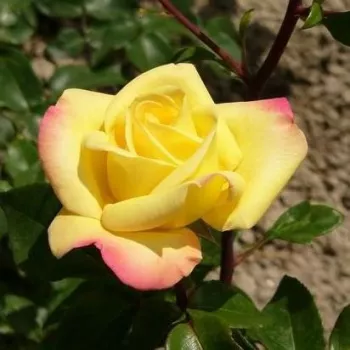
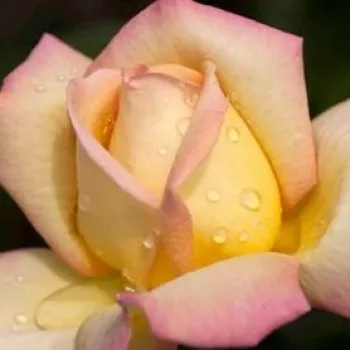
ROSE AIMÉE™ – cream-yellow-pink hybrid tea rose – Gaujard
In a compact London front garden or a small family border, ROSE AIMÉE™ offers an elegant way to bring classic hybrid tea blooms into a rain-aware, low-fuss planting scheme that still copes steadily with blustery, wet British weather on heavier soils. Its upright, medium-tall habit and dense, glossy foliage create a naturally tidy structure, while creamy yellow–pink, high-centred flowers provide a romantic focus for your path or entrance. As an own-root plant it builds long-term resilience, quietly renewing itself from the base for a reliable, decades-long lifespan with minimal complicated pruning. With remontant, generously repeating flushes, you enjoy months of flowering for cutting and display, especially when combined with simple, drought-aware watering and good drainage after heavy rain. In its first years it gradually develops from root establishment to stronger shoots and then full garden presence, rewarding patient beginners who favour sustainable simplicity over intensive pampering.
Usage options
| Target area |
Reasoning |
| Front garden feature rose |
The upright, medium-tall habit and dense, glossy foliage create a defined vertical accent beside a path or bay window, giving structure without overwhelming a small London terrace frontage – a reassuring choice for the busy urban homeowner. |
| Low-maintenance specimen in mixed border |
Reliable remontant flowering with moderate care needs means you mainly deadhead and water in dry spells, leaving the plant to repeat bloom through summer with little technical pruning – ideal for the time-pressed garden beginner. |
| Long-lived own-root focal plant |
Grown on its own roots, it can regenerate from the base after harsh winters or accidental damage, avoiding graft-related decline and helping maintain its form and flowering rhythm over many years – appealing to the sustainability-minded gardener. |
| Cutting patch or vase garden |
High-centred, exhibition-style blooms on upright stems are naturally suited to cutting, so a single bush can provide repeated, classic-looking flowers for indoor arrangements across the season – attractive for the home-decor conscious urbanite. |
| Small rose bed with simple care |
Consistent height, medium spread and recommended spacings make it straightforward to plan a neat, repeating layout that stays readable in modest spaces, with just routine feeding and weeding – practical for low-experience plot owners. |
| Sunny, well-drained clay or chalk border |
Medium disease resistance and tolerance of typical British conditions combine well with a site that drains after rain yet holds moisture, giving stable growth without constant spraying – reassuring for weather-exposed garden keepers. |
| Own-root rose for long-term family gardens |
As roots strengthen, then top growth builds, and finally the plant reaches its full visual effect by the third year, offering a gradual, dependable improvement that fits evolving family spaces – valuable for forward-planning household gardeners. |
| Container on terrace or balcony (large pot) |
In a 40–50 litre container with peat-free compost and steady watering, its upright habit and tidy foliage create a contained vertical accent that frames a doorway or seating area without demanding expert care – perfect for the compact-space gardener. |
Styling ideas
- Soft-entrance border – Line a short front path with ROSE AIMÉE™ and low lavender to echo its pastel tones and fragrance – suited to homeowners wanting a welcoming, classical look.
- Balcony-showpiece – Grow a single plant in a 50 litre pot, underplanted with trailing thyme for a neat, scented balcony focus – ideal for urban dwellers with limited space.
- Romantic-mix – Combine with nepeta and soft pink salvias in a small bed for layered texture and continuous colour – great for beginners seeking easy, long-season planting.
- Calm-cutting corner – Dedicate a sunny spot with 2–3 plants spaced for access, interplanted with airy grasses for stems that move beautifully in the vase – appealing to home florists.
- Structured-frontage – Use as repeating vertical accents between evergreen box or yew shapes to balance softness and order – best for those aiming at a tidy, low-input façade.
Technical cultivar profile
| Property |
Data |
| Name and registration |
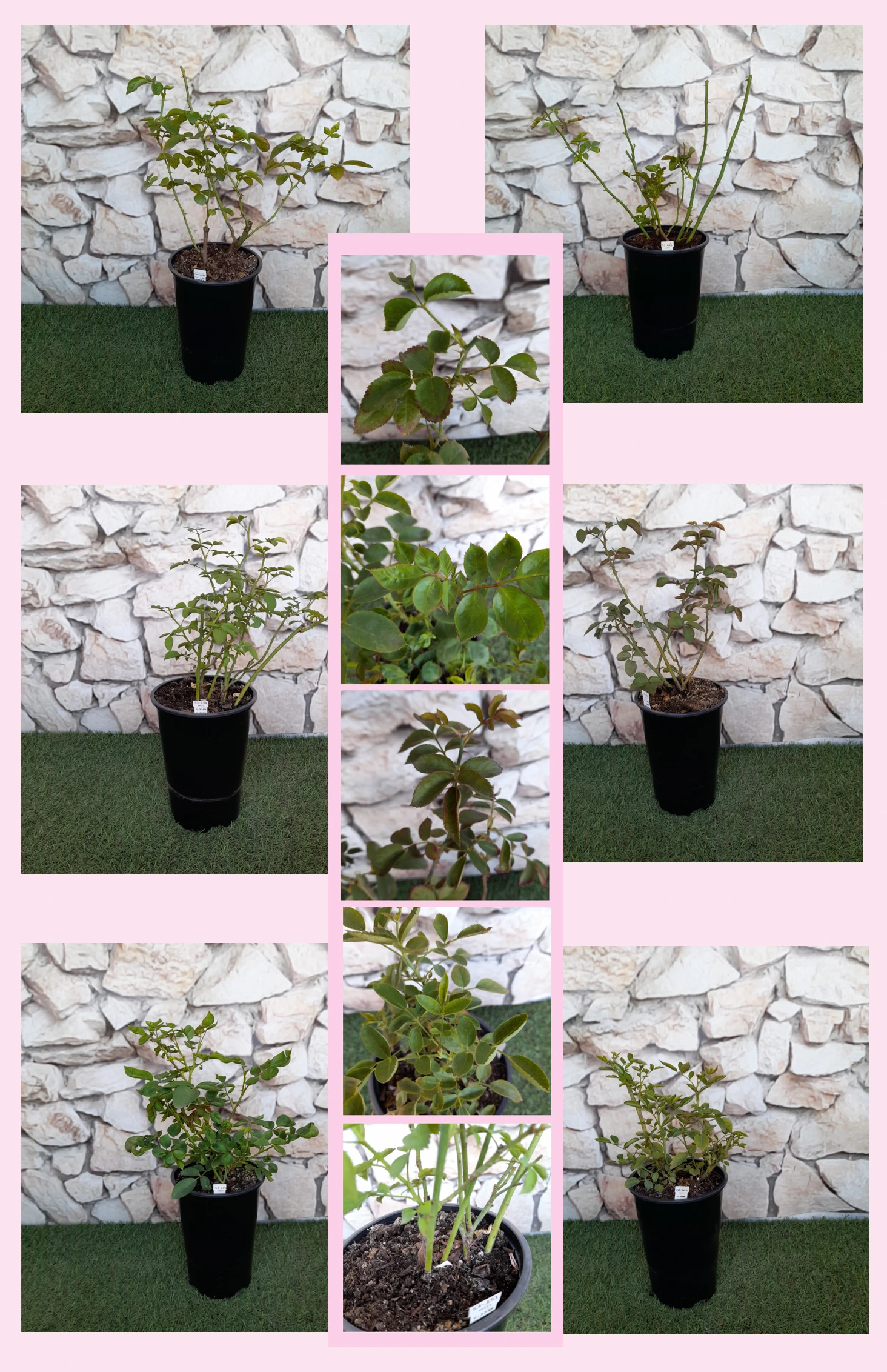
Hybrid Tea group garden rose, commercial name ROSE AIMÉE™ hybrid tea rose Gaujard; own-root 2-litre container form for consumer gardens, checked and confirmed for cultivar authenticity before sale. |
| Origin and breeding |
Bred by Jean-Marie Gaujard, Roseraies Gaujard, France, around 1955; hybrid tea type selected primarily for elegant flower form and reliable garden use rather than exhibition registration data. |
| Growth and structural characteristics |
Upright hybrid tea rose, about 100–140 cm tall and 70–110 cm wide, with dense, dark green, glossy foliage and moderate thorns, forming a tidy vertical shrub suited to beds, fronts and feature planting. |
| Flower morphology |
High-centred, pointed hybrid tea blooms of medium size, usually solitary on stems; double flowers with around 26–39 petals, remontant habit with a generous second flush given basic rose care. |
| Colour data and phenology |
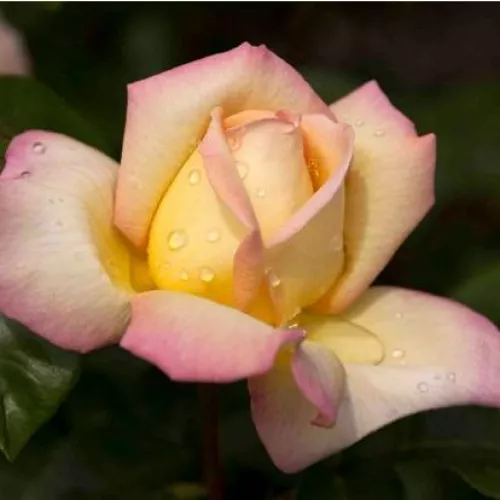
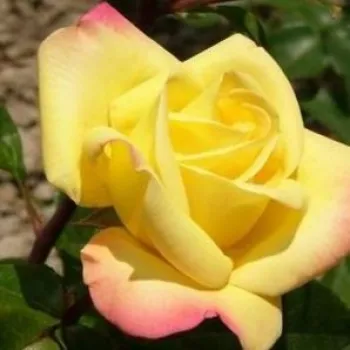
Cream-yellow to butter-yellow centres, creamy outer petals and pink edging; colour softens to straw-cream and gentle pink-peach in strong light while maintaining an overall harmonious, refined bicolour effect. |
| Fragrance and aroma |
Soft, pleasant perfume of mild strength; discretely scented rather than overpowering, contributing a classic rose note around paths, entrances and seating areas without dominating close quarters. |
| Hip characteristics |
Double flowers limit hip set; where formed, hips are small ellipsoids around 12–17 mm across, orange-red at maturity, adding occasional, modest autumn interest without significant self-seeding. |
| Resistance and winter hardiness |
Rated to approximately −21 to −18 °C (RHS H7, USDA 6b); resistant to powdery mildew and black spot with medium rust susceptibility, performing well in typical British garden conditions with basic hygiene. |
| Horticultural recommendations |
Best in full sun with moisture-retentive but well-drained soil; moderate maintenance with deadheading and occasional pest checks; spacing 55–100 cm depending on use, avoiding deep shade and waterlogging. |
ROSE AIMÉE™ offers elegant, long-season blooms, a compact, easy-care habit and durable own-root performance, making it a thoughtful choice for understated yet enduring structure and colour in smaller gardens.