ROSENSTADT FREISING ® – white-pink bedding floribunda rose - Kordes
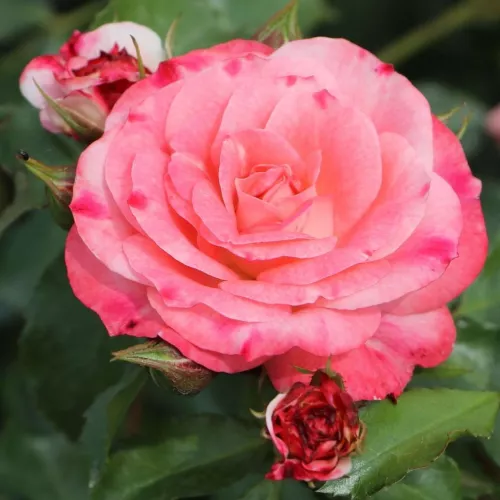
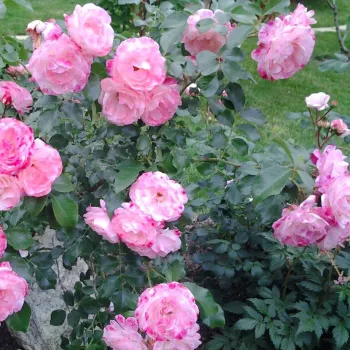
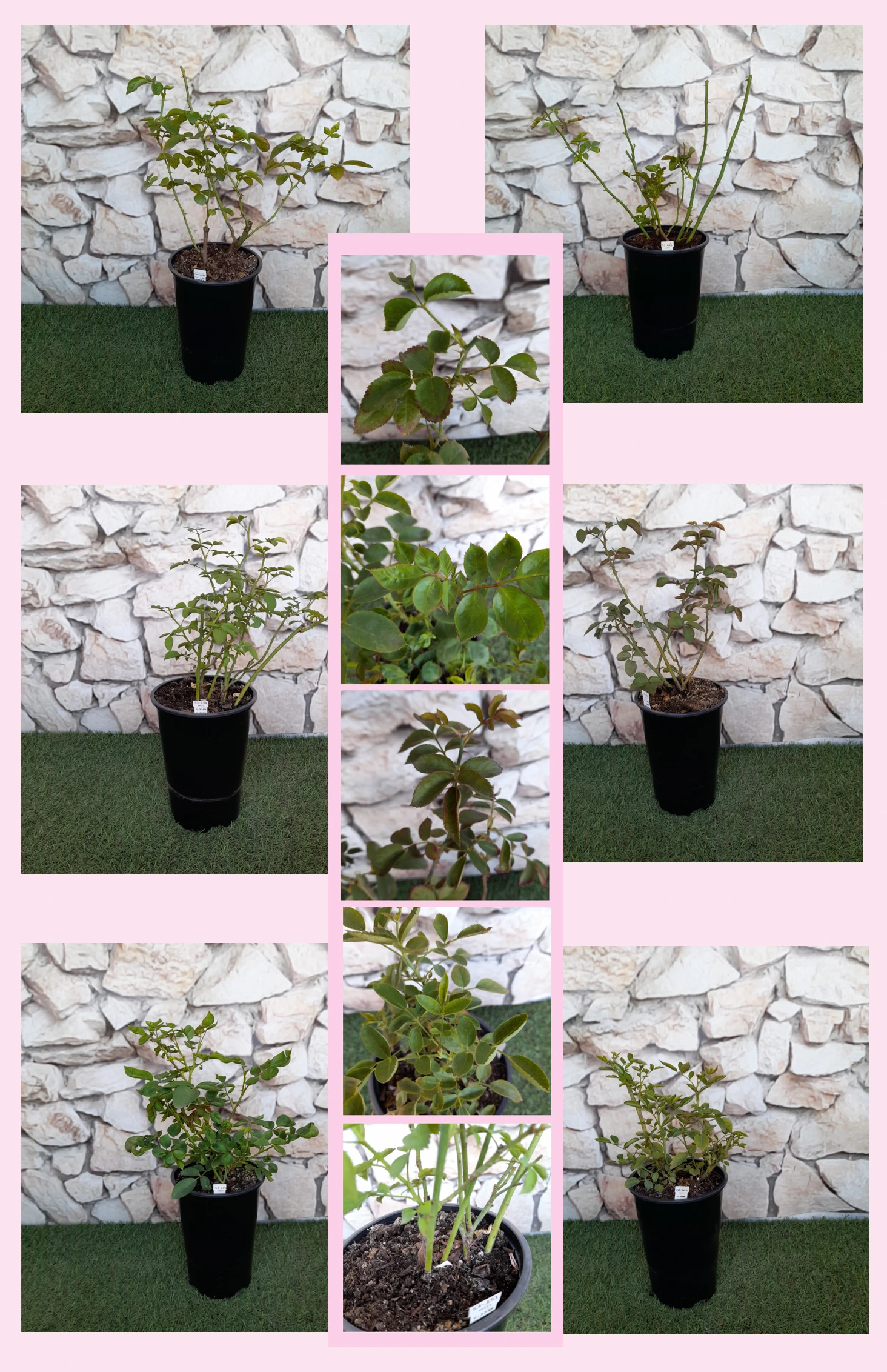
Step out after rain to a path lined with colour and effortless balance: ROSENSTADT FREISING ® brings clean, white-and-carmine blooms and glossy foliage that cope well with blustery showers and heavy, moisture-holding soils in typical UK gardens while staying healthy. This floribunda-style shrub repeats generously from early summer into autumn, with semi-double, bee-attracting flowers that largely tidy themselves, keeping your front garden or patio planting looking fresh with minimal deadheading. As an own-root rose it establishes quietly, then builds strength and flowering year by year, giving a long-lived, sustainable investment for compact, rainwater-friendly city spaces. Ideal for narrow beds, small hedges or a single statement in a 40–50 litre pot, it offers reliable structure, modern disease resistance and an easy rhythm of care that suits busy lifestyles and low-input, pollinator-aware planting choices.
Usage options
| Target area | Reasoning |
|---|
| London terraced-house front garden hedge |
Upright, dense growth to around 100–140 cm makes an elegant, low-maintenance flowering hedge that screens the street yet stays in scale with a narrow front garden, suiting busy urban homeowners. |
| Rainwater-friendly mixed bed by the path |
Good disease resistance and tolerance of exposed, showery conditions mean healthy foliage and flowers even where downpipes or paving shed extra water onto the bed, ideal for a sustainable city gardener. |
| Pollinator strip along a driveway |
Semi-double flowers with visible stamens invite bees to forage repeatedly through the season, adding gentle movement and ecological value alongside everyday parking for the wildlife-conscious owner. |
| Low-maintenance family flower border |
Self-cleaning blooms and modest pruning needs reduce ongoing chores, while repeat flowering keeps borders colourful in school holidays with minimal effort from a time-poor parent. |
| Statement rose in a large container |
In a 40–50 litre peat-free container with good drainage, it forms a well-shaped, long-lived feature plant by the front door, rewarding simple watering and feeding from the practical balcony or patio gardener. |
| Long-term “green investment” planting |
Own-root growth builds a resilient framework that regenerates well after hard pruning or weather damage, offering stable, long-lived ornamental value for the sustainability-minded buyer. |
| Small informal rose and lavender corner |
Glossy dark foliage and bicoloured blooms contrast beautifully with soft mounds of lavender or nepeta, giving a relaxed but coherent look that is easy to copy for the design-conscious beginner. |
| Community or shared front garden bed |
Reliable health, ADR-level disease resistance and repeat flowering mean it thrives with only occasional care from varied helpers, a robust choice for the community garden organiser. |
Styling ideas
- Striped-hedge – plant in a single row along a low fence, underplanted with drought-tolerant thyme to soften the base and provide extra bee forage – ideal for shared front boundaries.
- Pastel-ribbon – weave ROSENSTADT FREISING ® through drifts of pink phlox and white Lychnis for a soft, romantic strip in a terraced front garden – for those who like a “girly” yet tidy feel.
- Courtyard-focus – one rose in a 50 litre pot framed by slate chippings and a pair of salvias gives structure and colour with simple watering – suited to renters or balcony-patio spaces.
- Family-frame – use three plants behind a low evergreen edge and in front of taller shrubs to create a flowering frame for a small lawn – perfect for families wanting easy seasonal interest.
- Green-route – line a path with alternating ROSENSTADT FREISING ® and silvery Artemisia, allowing rainwater to soak into permeable gravel – for eco-aware owners softening hardstanding.
Technical cultivar profile
| Characteristic | Data |
|---|
| Name and registration |
Floribunda shrub rose from the Heckenzauber® collection; registered as KORcoptru and marketed as Rosenstadt Freising ®, with ARS exhibition name Rosenstadt Freising. |
| Origin and breeding |
Bred by Tim-Hermann Kordes (W. Kordes’ Söhne, Germany) from ‘Coppelia ’76’ × Flower Carpet®, bred 1993 and introduced in 2003 as a robust, decorative bedding and landscape rose. |
| Awards and recognition |
ADR rose (1996) with strong international trial results including silver medals at Rome, Monza and Kortrijk, and a gold medal at Geneva, plus a Certificate of Merit at Hradec Králové. |
| Growth and structural characteristics |
Upright, well-branched shrub reaching about 100–140 cm high and 65–95 cm wide, with dense, dark green, glossy foliage and moderate prickliness, forming a solid, hedge-capable structure. |
| Flower morphology |
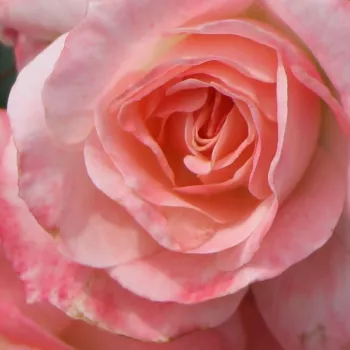
Semi-double, cupped blooms of medium size borne in clusters; around 13–25 petals, remontant with abundant repeat flowering, and generally self-cleaning as spent blooms drop naturally. |
| Colour data and phenology |
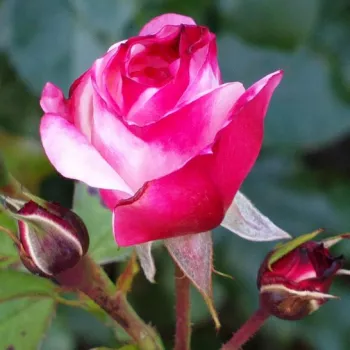
White base with carmine-red petal edges and pink speckling; colour softens and edges fade in strong sun, creating softer white-pink effects over time and seasonal variation in bicolour intensity. |
| Fragrance and aroma |
No noticeable fragrance; visual appeal and flower form are the main ornamental features, while open centres and visible stamens offer accessible nectar and pollen to visiting bees and insects. |
| Hip characteristics |
Produces moderate numbers of small, spherical hips, vivid orange-red and around 8–12 mm in diameter, adding subtle late-season interest where flowers have been left uncut after flowering. |
| Resistance and winter hardiness |
Strong overall disease resistance, notably to powdery mildew and black spot, with moderate rust susceptibility; hardy to about –21 to –18 °C (RHS H7; USDA zone 6b; Swedish zone 3). |
| Horticultural recommendations |
Low-maintenance floribunda for beds, edging, hedges, parks and urban spaces; suitable for partial shade, mass or specimen planting, and large containers with spacing adjusted to final size. |
ROSENSTADT FREISING ® offers repeat colour, strong health and pollinator-friendly blooms on a durable own-root framework that matures gracefully, a thoughtful choice if you favour long-term beauty over short-lived effects.