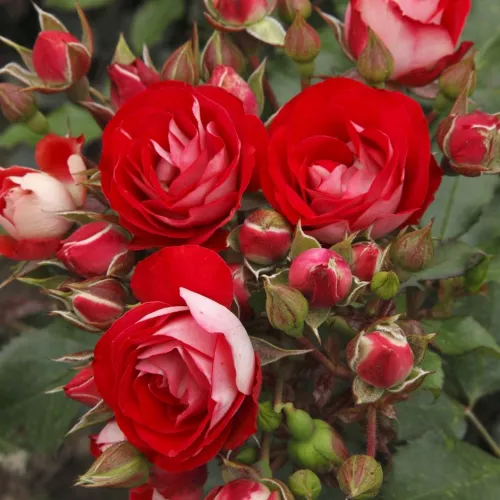
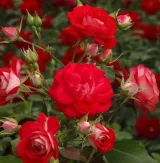
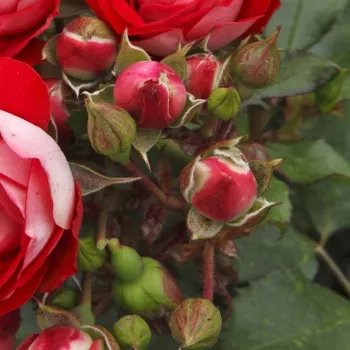
ROSIGE LANDDROSTEI® – red bedding floribunda rose
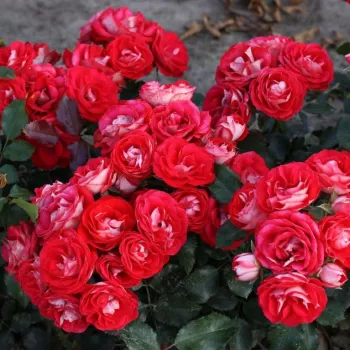
Imagine your small front garden after rain, the paving still damp, as clusters of pompon blooms glow in a clear mid‑red with a creamy, silvery reverse that keeps its colour well even in bright sun and brisk coastal weather with steady wind and rain. This compact, bushy shrub keeps its shape without complicated pruning, fitting beautifully into narrow beds, edging and pots from 40–50 litres upwards. Bred by Kordes for dependable garden performance, it offers a generous second flush, so your terrace or balcony sees long, lively flowering without constant deadheading. As an own‑root rose it settles in for a long lifespan, regenerating steadily, so you do less replacing and more relaxed enjoyment. In the first year it concentrates on roots, the second on framework and shoots, and by the third year you can expect its full ornamental impact.
Usage options
| Target area |
Reasoning |
| London terraced-house front border |
The compact, bushy habit fills narrow beds without overwhelming paths or windows, and its mid‑red, cream‑backed flowers give a refined, “dressed” look from pavement level. Own‑root plants establish for the long term with only light seasonal pruning for beginners. |
| Rainwater-conscious small urban garden |
Planted into improved, free‑draining soil beside permeable paving, it copes reliably with frequent UK showers and breezier spells, supporting a neat, colourful structure around rain‑collecting areas for urban owners. |
| Low hedge along a path or drive |
Regular spacing at 30–35 cm creates a tidy, low flowering line, with dense dark foliage and repeat clusters giving definition without needing clipping like a formal hedge, suiting those who prefer straightforward, once‑a‑year trimming for busy households. |
| 40–50 litre patio container |
Its moderate height and slightly spreading framework balance well in larger pots from 40–50 litres, where the bicolour pompon blooms can be appreciated up close; own‑root plants regrow reliably if winter or wind cause top growth losses for balcony gardeners. |
| Mixed “girly” front-garden planting |
The raspberry‑red tones and silvery reverse pair beautifully with soft pink perennials and variegated foliage, creating a romantic, feminine frontage that stays compact and ordered without fussy staking or shaping for style-conscious residents. |
| Family garden flower bed |
Children and adults alike can enjoy its ball‑shaped clusters at a manageable height, while the plant’s moderate thorniness and stable framework make it simple to work around during routine weeding and mulching for family gardeners. |
| Partially shaded side return |
This variety tolerates partial shade, so it keeps colour and form where sunlight is limited for part of the day, extending flowering interest into side passages and north‑easterly aspects that often defeat fussier roses for space-maximisers. |
| Small specimen in urban green space |
Used as a single focal shrub in a compact public or shared courtyard bed, it offers a long season of neat, small blooms on dark, glossy foliage, giving reliable structure even where moderate disease pressure and humidity are expected for community users. |
Styling ideas
- Front-Garden Ribbon – Plant a low ribbon of Rosige Landdrostei® along a short front path, underplanting with pale pink Geranium ‘Rozanne’ to soften the edge – ideal for house-proud terrace owners.
- Romantic Pots – In a 50‑litre container, combine this rose with trailing nepeta and soft grey sage for a feminine, scented look – suited to balcony and patio gardeners.
- Coastal Contrast – Use a short row beside gravel or permeable paving, adding narrow-leaved lavender for movement and fragrance – perfect for breezy, rain-exposed urban plots.
- Pretty Hedgelet – Create a knee-high hedge by spacing plants evenly, edging a lawn or drive and interspersing occasional white alliums – great for families wanting structure without rigid formality.
- Courtyard Focus – Place a single specimen amid variegated Weigela and low grasses to anchor a small bed with year-round shape – appealing to design-led small-garden owners.
Technical cultivar profile
| Parameter |
Data |
| Name and registration |
Rosige Landdrostei® is a floribunda bed rose from the Kordes breeding programme, registered as KORteidros and classified as a compact shrub-type bedding floribunda for garden and landscape use. |
| Origin and breeding |
Bred by Wilhelm-Alexander Kordes (Germany) from complex parentage involving an unknown seedling, ‘KORpeligo’ and ‘KORfloci08’, introduced and registered in Europe in 2017 by W. Kordes’ Söhne. |
| Growth and structural characteristics |
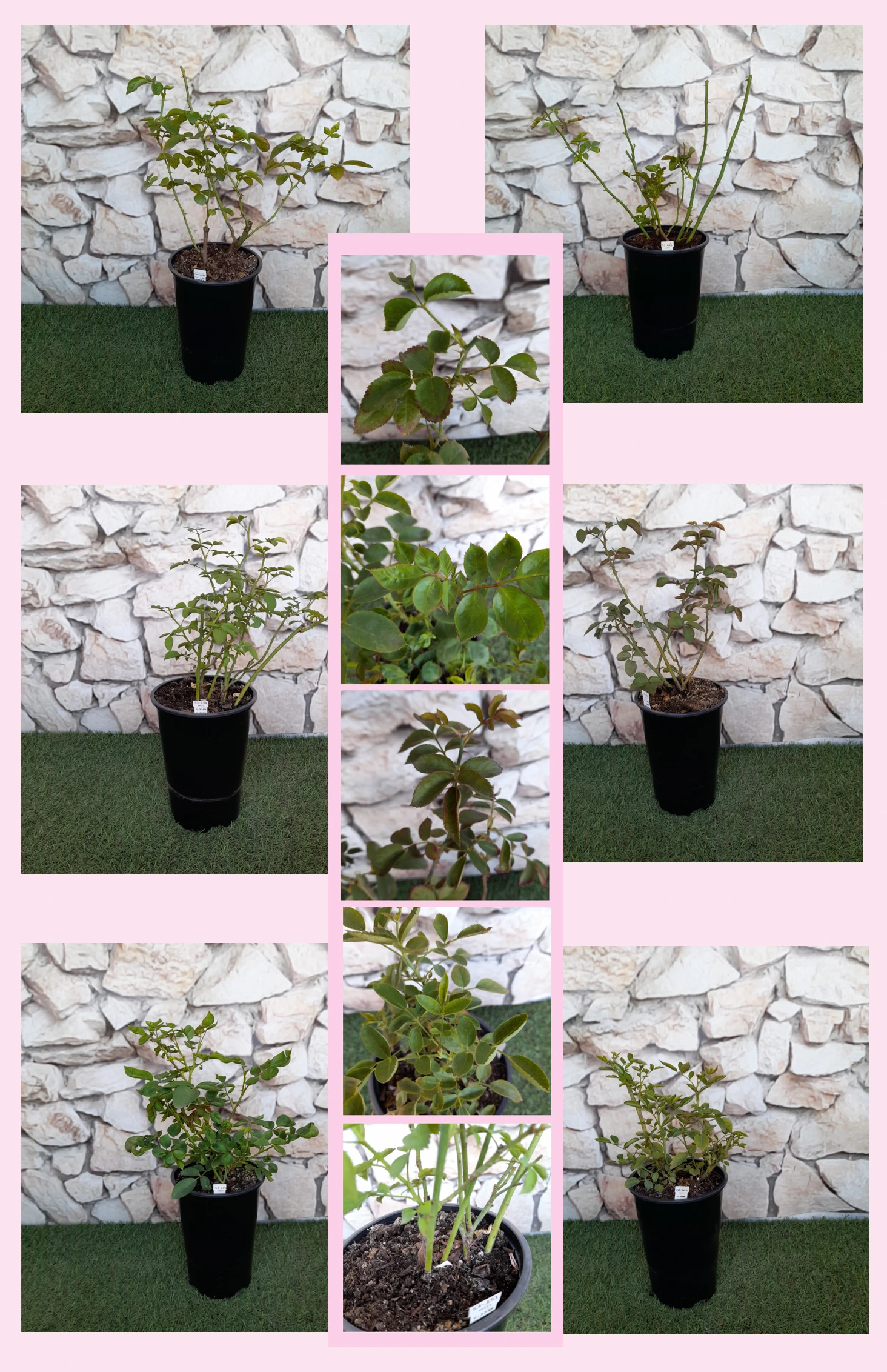
Forms a compact, slightly spreading bush 80–120 cm tall and 40–60 cm wide, with dense, dark green glossy foliage and moderate prickliness, giving good bed coverage and a stable framework over time. |
| Flower morphology |
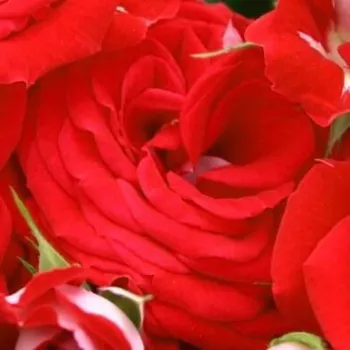
Produces small, double, ball-shaped to pompon blooms with 26–39 petals, carried in clusters of 3–10 per stem, flowering repeatedly with a notably generous second flush in average UK garden conditions. |
| Colour data and phenology |
Displays vivid medium-red upper petal surfaces with a creamy-white, silvery reverse, slowly fading toward raspberry tones; colour coded RHS 46A outer and 158C inner, with bicolour effects lasting well in sunlight. |
| Fragrance and aroma |
Lightly and delicately scented with a classical rose character; fragrance is subtle rather than dominant, adding a gentle note on warm, still days without overwhelming small terraces or seating areas. |
| Hip characteristics |
Hip set is generally sparse due to its double flower form; where formed, hips are small spherical structures 6–10 mm in diameter, coloured orange-red (RHS N30A) and of mainly ornamental, minor wildlife interest. |
| Resistance and winter hardiness |
Hardy in UK and comparable climates down to approximately −26 to −23 °C (RHS H7; USDA 5b), with medium resistance to black spot, mildew and rust, benefitting from good air circulation in humid locations. |
| Horticultural recommendations |
Best in well-prepared, free-draining soil for beds, edging, hedging or large containers; tolerates partial shade, dislikes prolonged drought, and prefers airy sites in humid towns to reduce disease pressure. |
Rosige Landdrostei® offers compact structure, repeat flowering and enduring colour on a resilient own-root framework, making it a thoughtful choice for long-lived, low-fuss planting.