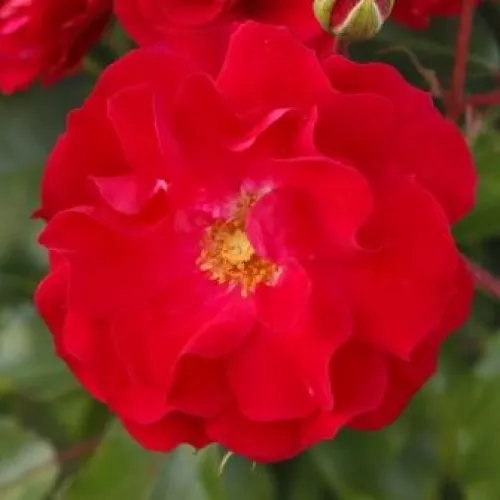
ROTILIA® – carmine-red bedding floribunda rose – Kordes
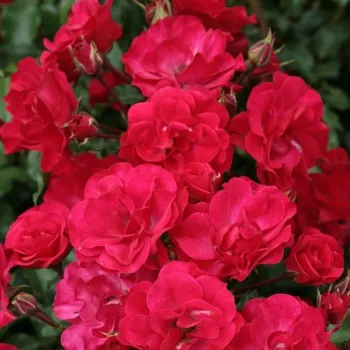
A compact, own‑root ROTILIA® settles quickly into everyday family gardens, bringing seasons of colour, low‑effort flowerbeds and reliable structure even where rain and wind meet heavier soils and chalky conditions. Its dense, glossy dark foliage and carpet of carmine‑red clusters create a long‑lasting impact from summer into autumn, with self‑cleaning blooms that keep beds and front gardens neat without deadheading. Semi‑double flowers offer simple access for visiting bees, while ADR‑level resistance and proven Gold Standard performance promise years of healthy growth. On its own roots the shrub regenerates steadily, building strong longevity beneath the surface – think Year 1 roots, Year 2 shoots, Year 3 full ornamental value – for a quietly sustainable choice in urban and suburban spaces.
Usage options
| Target area |
Reasoning |
| Terraced-house front garden border |
The compact 60–85 cm habit forms a tidy, low hedge that frames a small London front garden without blocking light. Its long flower season keeps entrances welcoming with carmine-red clusters. Ideal for busy homeowners seeking quick visual reward, especially beginners. |
| Low-maintenance flowerbed in heavy or chalky soil |
Own-root plants establish a resilient framework that tolerates typical suburban clay or chalk when combined with good drainage, needing minimal intervention once settled. Excellent for people wanting dependable colour rather than constant tending, particularly time-pressed gardeners. |
| Rainwater-friendly urban planting strip |
The dense, bushy canopy and fibrous root system help hold planting media in place in front gardens receiving roof run-off, softening hard surfaces while coping well with wet–dry swings. Suits those rethinking paved spaces into greener thresholds, notably sustainability-focused owners. |
| Pollinator-supporting mixed bed |
Semi-double blooms with accessible stamens offer foraging opportunities while still reading as richly petalled roses, complementing herbs like lavender, sage or nepeta for a gently buzzing, scented border. A thoughtful option for wildlife-aware families and urban pollinator-lovers. |
| Easy-care groundcover or edging |
The upright yet bushy structure and self-cleaning flowers create a near-continuous red carpet that stays neat without deadheading, perfect along paths or driveways where regular pruning is unrealistic. Well suited to householders preferring reliable edging over intricate clipping, including casual gardeners. |
| Small family garden play-area backdrop |
With a moderate height and compact spread, ROTILIA® gives strong colour behind lawns or play spaces without sprawling, while sturdy, disease-resistant foliage stays attractive through the season. A good match for families who need robust planting that looks after itself, especially parents. |
| Large container on balcony or patio |
Planted in a 40–50 litre peat-free pot, its compact root system and good heat tolerance suit sunny balconies and paved terraces, providing a long-flowering focal point with limited watering needs in normal summers. Ideal for city dwellers maximising small outdoor rooms, particularly balcony-owners. |
| Low-intervention urban public or shared spaces |
ADR and Gold Standard recognition confirm high disease resistance, so beds stay green and flowering without sprays, even in humid, fungal-prone city air, making maintenance rounds simpler for communal schemes. A sound choice for managers and residents wanting resilient planting, including community-gardeners. |
Styling ideas
- Front-row glamour – Line a narrow front border with ROTILIA® and underplant with low nepeta for a soft blue frill against vivid red – for homeowners wanting instant kerb appeal with minimal pruning.
- Urban meadow-edge – Mix with airy Panicum ‘Sangria’ and Agastache ‘Blue Fortune’ to blur the line between formal bed and mini meadow – for sustainability-minded city gardeners converting paved frontage.
- Playful pink-red combo – Pair the carmine-red flowers with blush daylilies and pale pink cosmos for a “girly” cottage feel – for families creating a cheerful, photogenic backdrop to everyday life.
- Structured simplicity – Repeat small groups along a straight path, interspersed with clipped lavender, to balance clean geometry with long-season colour – for beginners favouring calm, ordered planting.
- Balcony spotlight – In a generous 50 litre container, combine ROTILIA® with trailing thyme and silvery sage for fragrance and movement – for flat-dwellers seeking a single, easy centrepiece.
Technical cultivar profile
| Parameter |
Data |
| Name and registration |
Floribunda bed rose; registered as KORvillade, marketed as Rotilia® (RigoRosen® collection). ARS exhibition name Rotilia®. Group: floribunda, commercial type flowerbed rose. |
| Origin and breeding |
Bred by Wilhelm Kordes III (W. Kordes’ Söhne), Germany, 1992; parentage undisclosed. Registered 2006, introduced after 2006 through Kordes in Europe and beyond as a robust landscape rose. |
| Awards and recognition |
Multiple international medals: Dublin, Kortrijk, Geneva gold (2001); further silver medals across Europe. ADR certification in 2002 and Gold Standard award in 2008 underline proven garden performance. |
| Growth and structural characteristics |
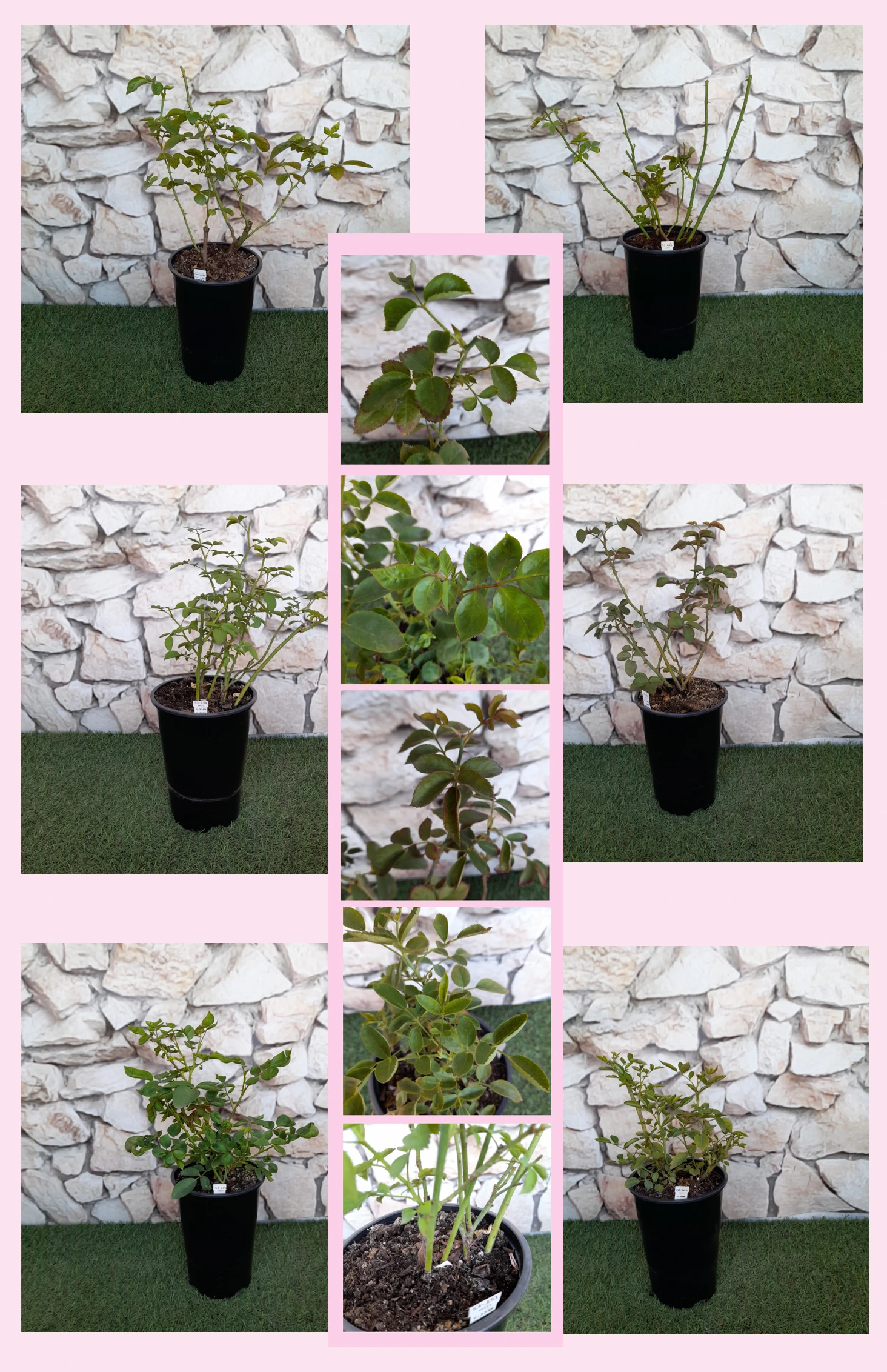
Compact, upright, bushy shrub 60–85 cm high, 40–60 cm wide, with dense, glossy dark green foliage and moderate prickles. Forms a low, even mass suitable for edging, bedding and small-scale groundcover. |
| Flower morphology |
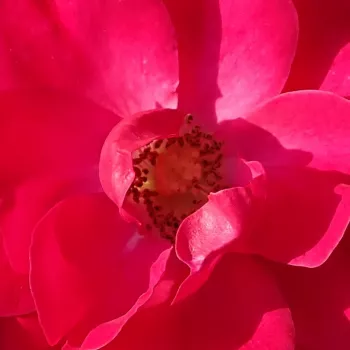
Semi-double, flat clusters of medium-sized flowers (approx. 4–7 cm), 9–16 petals. Freely flowering, remontant with abundant second flush. Self-cleaning habit; spent blooms mostly fall without deadheading. |
| Colour data and phenology |
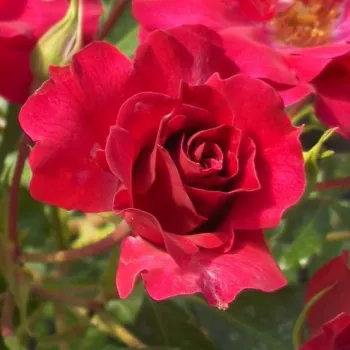
Carmine-red, cool-toned blooms; RHS 53B outer, 53C inner petals. Newly opened flowers fiery red, lightening to raspberry with a slight silvery edge in sun, yet holding colour respectably through the flowering period. |
| Fragrance and aroma |
Light, fleeting scent with a wild-rose character, often unnoticed in passing but perceptible at close range. Selected primarily for visual impact and durability rather than strong fragrance in high-traffic plantings. |
| Hip characteristics |
Produces small, spherical rose hips, around 7–10 mm in diameter, in scarlet-red (RHS 46A). Hip set is moderate and may add discrete autumn interest without dominating the plant’s overall appearance. |
| Resistance and winter hardiness |
High resistance to black spot, powdery mildew and rust. Hardy to approx. −21 to −18 °C (RHS H7, USDA 6b, Swedish zone 3). Tolerates heat and moderate drought but appreciates watering in prolonged dry spells. |
| Horticultural recommendations |
Suited to beds, edging, parks, groundcover and urban green spaces. Plant 35 cm apart for masses or 55 cm as specimens. Performs in full sun or partial shade with decent drainage; own-root form supports long service life. |
ROTILIA® offers compact, season-long carmine-red colour, strong disease resistance and resilient own-root growth, making it a thoughtful choice for lasting structure in smaller gardens and urban spaces if you seek dependable beauty with little fuss.