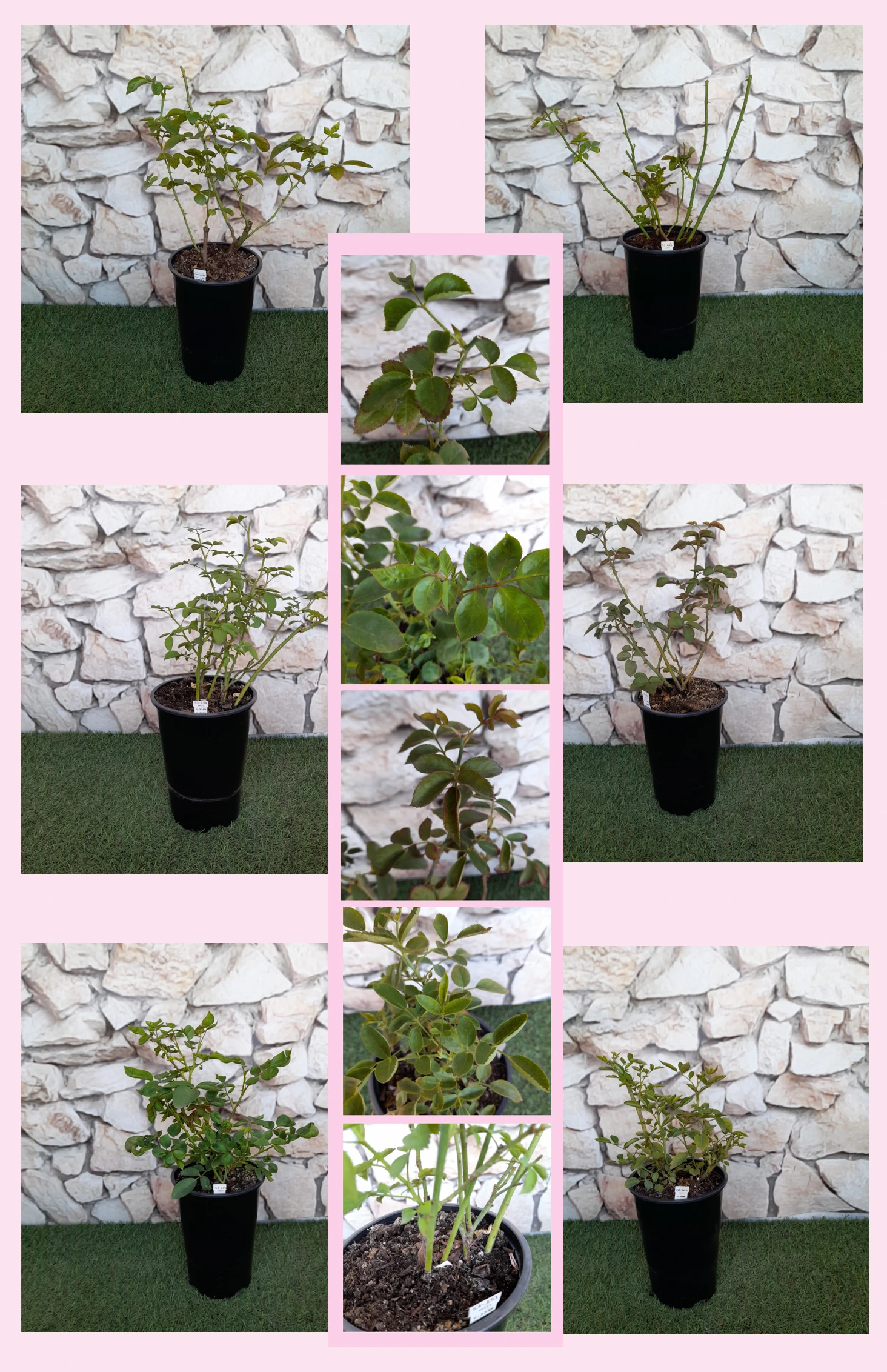
SATCHMO – orange-red bedding floribunda rose - McGredy
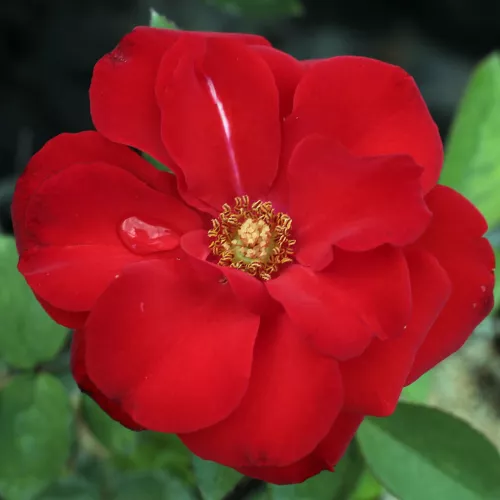
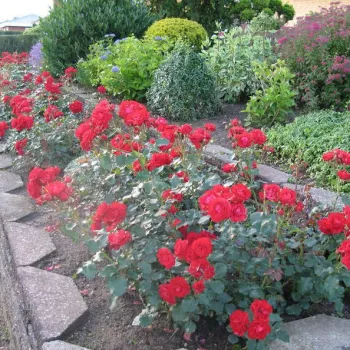
Step outside after rainfall and this compact floribunda brings a sense of balance to a small front garden, its glossy foliage and glowing blooms catching the light. Bred for generous repeat flowering, it keeps producing clusters of vibrant orange-red roses from early summer to autumn with only modest deadheading, while its semi-double form quietly supports pollinators in busy city streets. Own-root planting offers reassuring long-term stability, with the plant regenerating reliably from its base rather than depending on a graft, ideal where winter, wind and occasional neglect might test less robust roses. In containers of at least 40–50 litres it performs confidently, and in heavier clay beds it responds well to improved drainage and mulching to cope with persistent winter wet and summer humidity. Over time you can expect a natural rhythm: first year focused on rooting, second on building bushy structure, and by the third a settled, full display that feels part of the garden. Its moderate maintenance needs and good self-cleaning habit keep your space looking orderly with minimal effort, while the mild, fresh fragrance adds a subtle note by the front path. Designed to thrive in typical family gardens, longevity and reliable colour make ‘Satchmo’ a practical, rainwater-friendly choice for urban beds and terraces, where sustainable, low-fuss planting supports everyday calm.
Usage options
| Target area | Reasoning |
|---|
| Front garden bedding strip |
Compact, upright bushes with dense foliage and vibrant orange-red clusters give a tidy yet cheerful edge to a small London front garden, offering repeat colour from early summer into autumn with minimal shaping, ideal for the time-pressed homeowner. |
| Pollinator-friendly mixed border |
Semi-double blooms with accessible stamens provide nectar interest among perennials, while the mild fruity scent and continuous flowering create a gentle wildlife corridor without feeling untidy, suiting environmentally minded beginners. |
| Large container on terrace or balcony |
In a 40–50 litre peat-free container this bushy floribunda forms a stable, long-lived feature, its self-cleaning flowers and moderate care needs fitting well with busy urban routines and limited maintenance windows for city-based renters. |
| Low flowering hedge along path |
Planted at closer spacing it forms a low, colourful division that repeats flower reliably, with own-root plants regenerating evenly from the base for a durable line that copes well with everyday knocks and children’s play, reassuring cautious gardeners. |
| Rainwater-managed front garden |
Suited to improved clay or free-draining beds where stormwater is directed into planting, its good heat tolerance and regular flowering respond well to rainwater harvesting, supporting a greener streetscape for sustainably minded families. |
| Coastal or exposed suburban site |
Bushy, medium-height growth with firm stems and glossy leaves stands up to wind and wet weather without looking battered, maintaining ornamental value over many seasons for those in breezier locations and coastal-edge households. |
| Low-maintenance family border |
Good self-cleaning, moderate disease resistance and dependable remontant flowering keep beds presentable with light pruning and occasional pest checks, matching the needs of people who like colour but prefer straightforward routines as busy parents. |
| Long-term structural planting in small gardens |
The own-root form supports a long lifespan, regrowing from its base if stems are damaged and building into a stable, bushy framework over several seasons, giving enduring structure and colour for long-range-planning owners. |
Styling ideas
- Jazzed-Edge – Line a narrow front path with ‘Satchmo’ and soft grey paving, underplanting with Geranium macrorrhizum to suppress weeds and perfume the air – ideal for low-fuss London terraces.
- Sunset-Border – Combine its orange-red flowers with purple Echinacea and airy dwarf Miscanthus for a warm, modern palette – perfect for design-conscious urban gardeners.
- Balcony-Orchard – Grow a single plant in a 50-litre container with trailing thyme and nepeta around the base – suited to small-balcony residents wanting colour and pollinator support.
- Play-Safe – Use a short hedge of ‘Satchmo’ to frame a lawn, keeping height manageable while providing long-season interest – good for families needing clear sightlines and easy upkeep.
- Rain-Garden – Position in a free-draining gravel mulched bed that catches downpipe runoff, interplanted with lavender and sage – appealing to homeowners interested in water-wise, resilient planting.
Technical cultivar profile
| Parameter | Data |
|---|
| Name and registration |
Floribunda bed rose registered as ‘Satchmo’, used commercially as Satchmo Bedding rose Satchmo; approved exhibition name Satchmo in the Floribunda bush category. |
| Origin and breeding |
Bred by Samuel Darragh McGredy IV from ‘Evelyn Fison’ × ‘Diamant’; introduced 1972 after registration in 1970 via Jackson & Perkins and McGredy Roses International. |
| Awards and recognition |
Recognised with a Gold Medal at Le Roeulx in 1970 and the prestigious Golden Rose Award at The Hague in 1975 for garden and bedding performance. |
| Growth and structural characteristics |
Bushy, upright plants 60–90 cm high and 50–70 cm wide with dense, dark green glossy foliage and moderate prickles; good self-cleaning habit keeps plants neat. |
| Flower morphology |
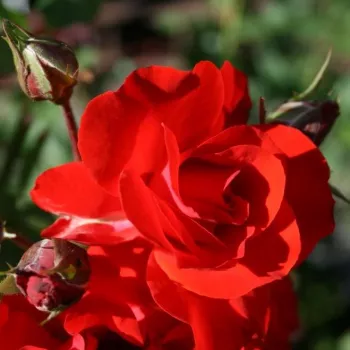
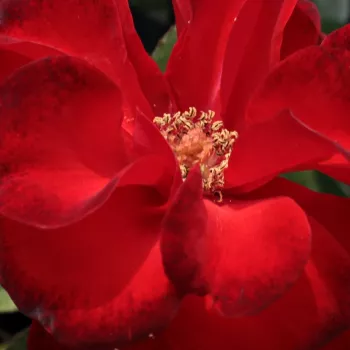
Semi-double, cup-shaped to flat-opening blooms with 13–25 petals in medium-sized clusters; remontant habit gives a strong main flush followed by abundant repeat flowering. |
| Colour data and phenology |
Vibrant orange-red (RHS 40A–41A) with slightly lighter petal reverses; colour may lighten a little in strong sun yet remains vivid in cooler conditions throughout flowering. |
| Fragrance and aroma |
Mild, fresh, fruity fragrance noticeable at close range without overpowering nearby seating areas; suitable for paths and entrances where a subtle scent is preferred. |
| Hip characteristics |
Forms small, spherical hips 8–12 mm across in moderate numbers; orange-red (RHS 40A) and decorative in late season, while also offering some wildlife food interest. |
| Resistance and winter hardiness |
Hardy to about −21 to −18 °C (RHS H7, USDA 6b) with medium resistance to black spot, mildew and rust; tolerates heat well if watered regularly in dry periods. |
| Horticultural recommendations |
Best in sunny sites with improved drainage; spacing from 35–65 cm depending on use, at 5.7–6.5 plants/m² for bedding; moderate maintenance, occasional pest and disease checks advised. |
Satchmo offers long-season orange-red colour, semi-double pollinator-friendly flowers and a durable own-root structure that settles in for years of reliable performance, making it a thoughtful choice for compact, sustainable gardens.