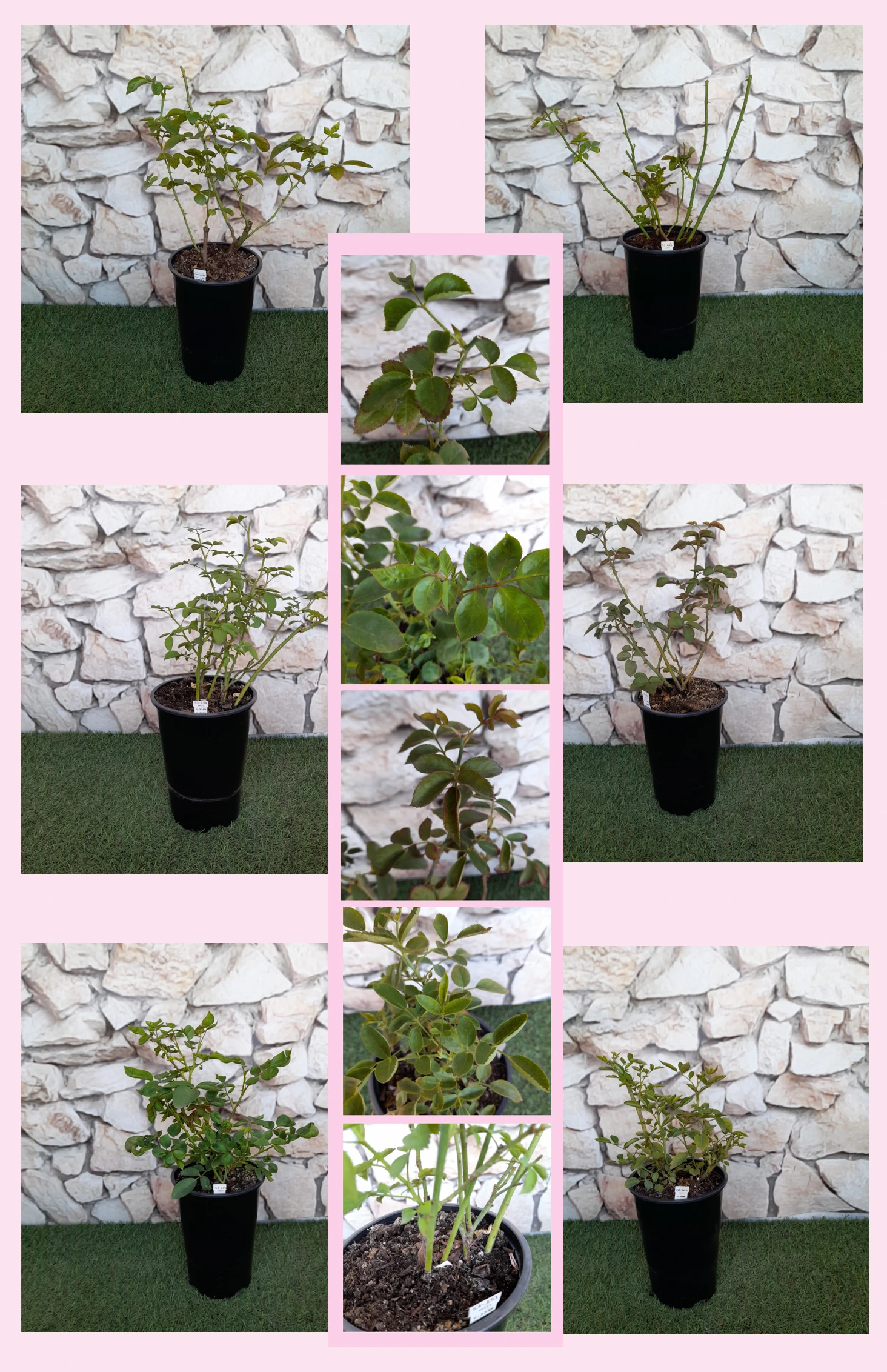
SCHÖNE KOBLENZERIN ® – raspberry-cream-white flowerbed floribunda rose
Imagine stepping out after rain into a small London front garden where glossy foliage and raspberry‑cream blooms bring a sense of balance and soft colour without demanding constant attention. SCHÖNE KOBLENZERIN ® is a compact, upright floribunda bred by Kordes for reliable performance and ADR‑tested health, coping well with breezy, damp conditions and heavier soils that need thoughtful drainage. Semi‑double, self‑cleaning clusters flower repeatedly from early summer well into autumn, so the shrub stays neat with only light deadheading and an annual tidy. Its barely thorny stems and modest size make it easy to handle in narrow beds or 40–50 litre containers, ideal where children pass by or access is tight. As an own‑root eleanorROSE® ORIGINAL in a 2‑litre pot, it establishes steadily for long‑term lifespan and dependable regrowth, building roots in the first year, more bushy shoots in the second, and full ornamental impact by the third season for busy urban gardeners.
Usage options
| Target area |
Reasoning |
| Front garden flowerbed beside a path |
Its compact, upright habit and 60–85 cm height suit narrow front borders, giving a structured line of raspberry‑cream flowers that remain tidy thanks to good self‑cleaning, ideal for low‑fuss edging for the busy urban homeowner. |
| Grouped planting in small family gardens |
Planting 5–6 shrubs per m² quickly creates a full, bushy bed with dense, medium‑green foliage and season‑long colour, providing an easy, coordinated feature that matures gracefully without replanting for the long‑term garden planner. |
| Rainwater‑friendly clay or chalky soils |
Once established, its ADR‑tested robustness combines well with thoughtful drainage on heavier or chalky UK soils, coping with showery, breezy weather so beds fed from water butts still look composed for the sustainability‑minded gardener. |
| Low‑maintenance mixed rose or shrub border |
Repeat, remontant flowering with minimal deadheading keeps the shrub presentable between other perennials, while medium disease resistance and tidy foliage reduce maintenance visits across the season for the time‑pressed enthusiast. |
| Large containers on terraces or balconies |
Its bushy, compact form is well suited to 40–50 litre pots, where own‑root stability and modest size give a long‑lived focal point that can be watered with saved rainwater on steps or balconies for the space‑conscious city dweller. |
| Child‑friendly approach or play areas |
With barely thorny stems and small flowers, it offers soft colour near front doors or along short paths with less risk of scratches, making it a considerate choice where children and pets pass regularly for the family‑focused gardener. |
| Formal edging and low hedging |
Recommended spacings of 35–40 cm allow neat, repeat‑flowering lines that frame lawns or driveways, while self‑cleaning clusters help the hedge keep its shape without constant grooming for the order‑loving home gardener. |
| Cut stems for informal indoor posies |
Short, sturdy, upright shoots with clusters of raspberry‑pink to cream blooms are easy to harvest, letting you bring gentle, sweetly rose‑like but very light fragrance indoors from a single compact bush for the home‑styling beginner. |
Styling ideas
- Terraced‑Chic – Line a narrow London front bed with SCHÖNE KOBLENZERIN ®, underplant with low nepeta and mulch with gravel for tidy, rain‑permeable charm – ideal for design‑aware city homeowners.
- Soft‑Hedging – Use as a low hedge along a path, alternating with lavender for fragrance and year‑round structure, relying on its compact, upright habit – for those who like gentle formality.
- Container‑Calm – Plant one shrub in a 50 litre pot with trailing thyme at the rim, watering from a water butt for a sustainable balcony focal point – perfect for balcony and patio gardeners.
- Pastel‑Border – Combine with Gypsophila ‘Festival Pink Lady’ and airy grasses so the raspberry‑cream clusters float among soft textures – suited to fans of romantic, low‑maintenance planting.
- Family‑Front – Place near doorways where barely thorny stems and self‑cleaning blooms give colour without snagging coats or schoolbags – ideal for busy families wanting safe, easy impact.
Technical cultivar profile
| Parameter |
Data |
| Name and registration |
Floribunda bed rose; registered as KORburox, marketed as SCHÖNE KOBLENZERIN ® Bedding rose KORburox; ARS exhibition name Schöne Koblenzerin, meaning “the beauty of Koblenz”. |
| Origin and breeding |
Bred by Tim‑Hermann Kordes (W. Kordes’ Söhne, Germany) from unknown parentage; bred 1999, registered 2009, introduced 2011 in Germany as a compact, modern bedding floribunda rose. |
| Awards and recognition |
Holds the prestigious ADR 2009 award, indicating independently tested garden performance with good overall resilience, ornamental value and flowering continuity under Central European conditions. |
| Growth and structural characteristics |
Upright, compact, bushy shrub 60–85 cm high and 50–75 cm wide, densely clothed in glossy medium‑green foliage, with barely thorny shoots and a naturally neat outline suitable for edging or grouping. |
| Flower morphology |
Semi‑double, cup‑shaped clusters with around 13–25 petals; small blooms 0.5–1.5 in across, carried in sprays on branching stems, repeating well with abundant second flushes across the flowering season. |
| Colour data and phenology |
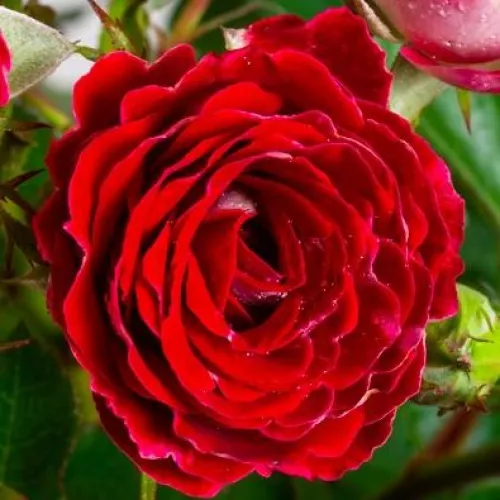
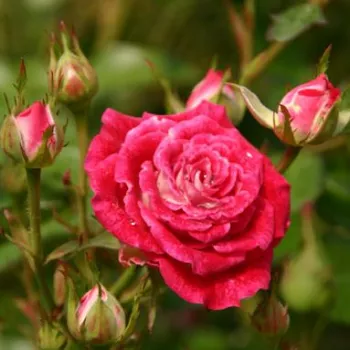
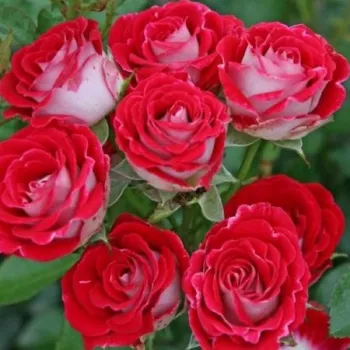
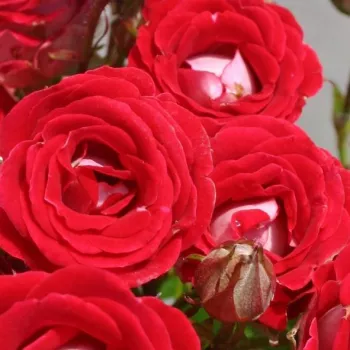
Raspberry cream‑white flowers; inner petals velvety raspberry‑pink (RHS 60A), outer sides silvery‑cream (RHS 155C), fading through pale pink to cream, more slowly and intensely coloured in cooler weather. |
| Fragrance and aroma |
Delicate, sweet, rose‑like fragrance of very weak intensity; scent is barely noticeable outdoors, making it unobtrusive near entrances, windows or seating where strong perfume is not desired. |
| Hip characteristics |
Occasional small, spherical orange‑red hips 5–8 mm in diameter may form after flowering, adding modest late‑season interest without significantly affecting overall blooming performance. |
| Resistance and winter hardiness |
Rated H7, hardy to about −21 to −18 °C (USDA 6b, Swedish zone 3); medium resistance to powdery mildew, black spot and rust, with heat tolerance good if watered during extended dry spells. |
| Horticultural recommendations |
Prefers sunny positions; plant at 35–40 cm for hedging, 65 cm as a specimen, 5–6 plants/m² for beds; maintenance medium, generally limited to routine pruning, feeding and occasional plant‑health checks. |
SCHÖNE KOBLENZERIN ® offers compact, long‑lived, repeat raspberry‑cream colour on an easy‑care own‑root shrub that settles in steadily over the years; a thoughtful choice if you want dependable charm with modest effort.