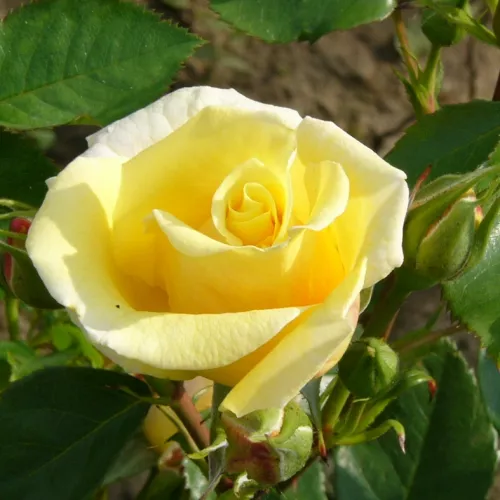
SCHÖNE VEITSHÖCHHEIMERIN – yellow bedding floribunda rose – Márk
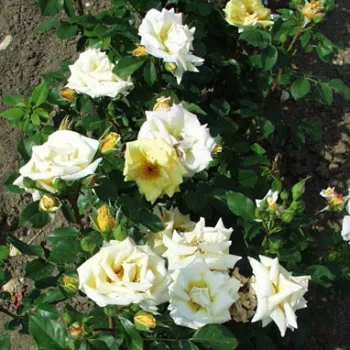
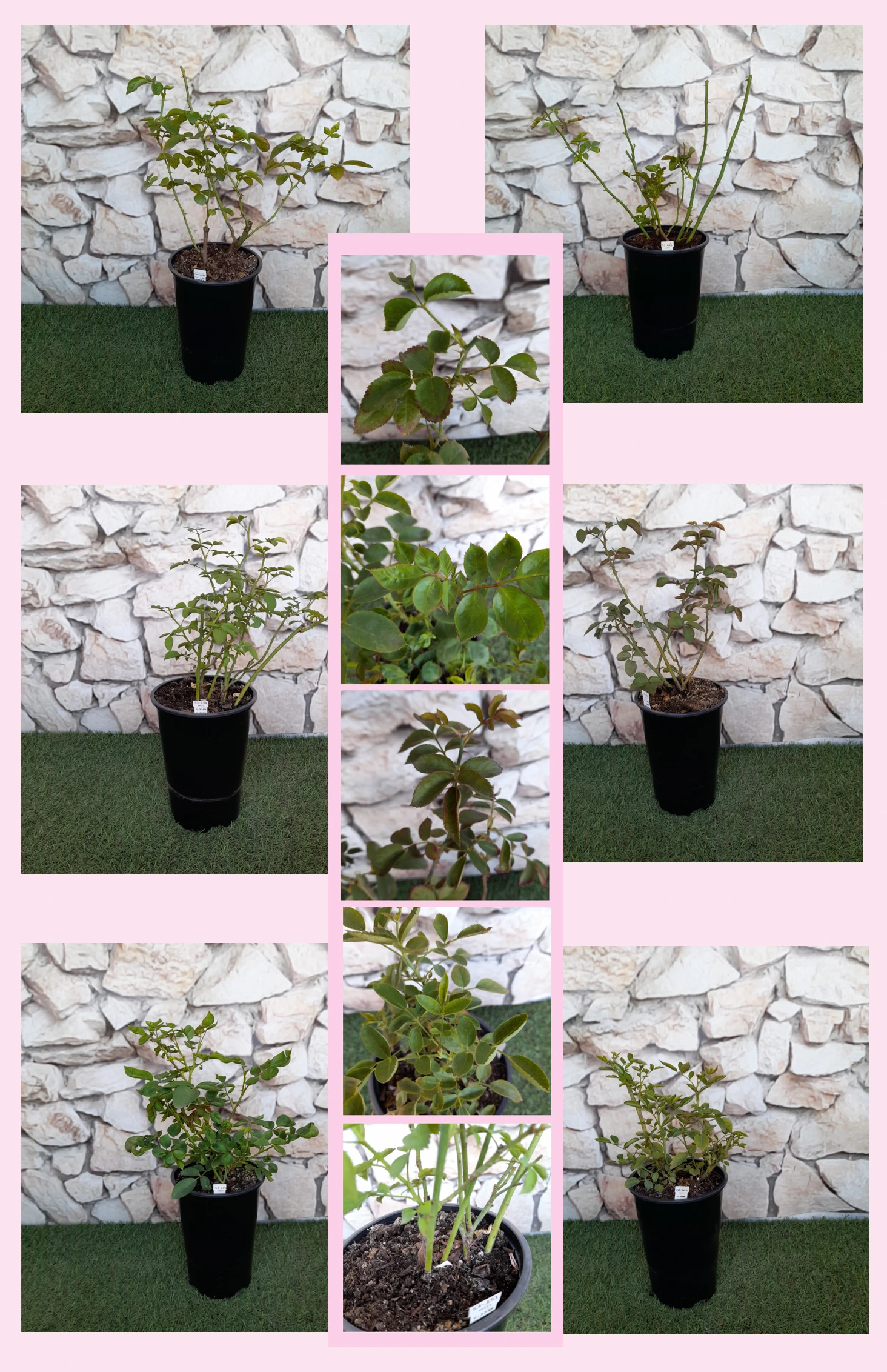
With its softly fragrant clusters of golden-yellow blooms, SCHÖNE VEITSHÖCHHEIMERIN brings a sense of post-rain balance and gentle light to small London front gardens and compact borders. This bushy floribunda forms a dense, mid-height structure that suits narrow beds, edging and low, informal hedges, coping well with blustery, wet UK weather and heavier soils where drainage is improved. The own-root, 2-litre plant settles in steadily for a long lifespan, building roots first and then maturing top growth, so from planting you can expect reliable colour through summer, an easy-care routine with only occasional plant protection, and enduring value as it regenerates well after pruning. In beds, parks or urban schemes it delivers generous coverage of bloom, while its soft, fruity fragrance lends a gentle “girly” charm to rainwater-friendly, sustainable city gardens.
Usage options
| Target area | Reasoning |
|---|
| London terraced-house front garden border |
The compact, bushy habit and mid-height growth create a well-defined, welcoming front-garden line without overwhelming a narrow space, giving a tidy, structured feel that suits repeated planting along a path for beginners and busy owners |
| Low flowering hedge along a path or drive |
Planted at 40 cm intervals, this floribunda knits into a continuous, softly clipped hedge that stays dense and stable over many seasons, benefiting from the own-root habit that helps it recover evenly from pruning for long-term-minded gardeners |
| Small bedding schemes in family gardens |
In a typical family back garden, its floribunda clusters give generous, season-long colour with only medium maintenance, allowing you to enjoy a bright “girly” yellow feature without complex care or frequent replacements for time-poor hobby gardeners |
| Urban rainwater-friendly front garden |
This rose combines well with permeable surfaces and improved drainage on heavier soils, maintaining its health under regular rainfall and wind while offering reliable flowering as the shrub fills out over the first three years for sustainability-focused homeowners |
| Mixed planting with lavender, sage or nepeta |
Schöne Veitshöchheimerin’s warm yellow tones contrast attractively with purple or blue perennials, sharing the spotlight without competing for height, and its repeat flowering keeps the border cohesive across the summer months for design-conscious city gardeners |
| Public or shared front-garden strips |
The durable, own-root plants build a strong framework that stands up to minor knocks, variable care and periodic trimming, giving consistent ornamental value and making it suitable for communal or rented settings where reliability matters for low-commitment residents |
| Container planting in large pots |
In a 40–50 litre pot, its bushy form and repeat-flowering clusters provide long-season display on patios or balconies, with manageable watering and feeding needs that suit those wanting impactful colour from one main feature plant for balcony and patio owners |
| Small park or urban green-space beds |
Square or hexagonal mass planting quickly builds a carpet of yellow colour, and the moderate disease resistance, combined with straightforward pruning, keeps maintenance predictable for local authorities or shared schemes seeking visual impact for community-space planners |
Styling ideas
- Golden-edge ribbon – Line a narrow London terrace front border with repeated plants for a soft yellow edging, underplant with creeping thyme to fill gaps – ideal for design-aware beginners.
- Sunny-cottage mix – Combine with lavender and nepeta in a small bed to echo cottage-garden charm, using the rose as a low, glowing anchor – suited to romantic, “girly” front gardens.
- Urban-hedge glow – Create a low hedge along a shared pathway, weaving in santolina for silver contrast and year-round structure – practical for busy households sharing access.
- Balcony focal pot – Grow a single shrub in a 50 litre container with trailing herbs at the rim for a scented, easy-care focal point – perfect for first-time balcony gardeners.
- Parklet colour block – Mass-plant in square or hexagonal patterns, punctuated by airy perennials like Knautia, to form a resilient, long-lived colour patch – useful for small civic beds.
Technical cultivar profile
| Parameter | Data |
|---|
| Name and registration |
Schöne Veitshöchheimerin is a bedding floribunda shrub rose from the Márk range, used as a bed rose in flowerbeds and borders; the trade name references the Bavarian town Veitshöchheim. |
| Origin and breeding |
Bred by Hungarian rosarian Márk Gergely around 1991, introduced commercially by PharmaRosa Ltd. in 2021; detailed parentage and breeding institution data are not documented for this cultivar. |
| Growth and structural characteristics |
Bushy shrub reaching about 65–95 cm high and 60–85 cm wide, with dense, glossy mid-green foliage and moderate prickliness; forms a rounded, space-filling outline suited to bedding and low hedging. |
| Flower morphology |
Large, double, cup-shaped blooms with approximately 26–39 petals, borne in clusters of three to seven per stem; remontant, giving an abundant second flush that prolongs the flowering season in beds. |
| Colour data and phenology |
Intense golden yellow flowers with lemon-yellow buds; colour gradually softens to pale cream-yellow with ivory-white petal tips, offering a gentle fading effect from centre to edge across the bloom’s life. |
| Fragrance and aroma |
Soft, fresh fragrance with a mild fruity note, noticeable at close range without being overpowering; contributes a pleasant, refined scent near paths or seating areas without dominating small spaces. |
| Hip characteristics |
Produces spherical orange-red hips, roughly 7–11 mm in diameter, in moderate quantities; hips add subtle late-season interest and may attract wildlife where spent flowers are left un-deadheaded. |
| Resistance and winter hardiness |
Hardy to around -21 to -18 °C (RHS H7, USDA 6b, Swedish zone 3); disease resistance is medium to common foliar problems such as black spot, powdery mildew and rust under typical garden conditions. |
| Horticultural recommendations |
Best planted 40–80 cm apart depending on hedge, mass or solitary use; prefers improved drainage on heavier soils, with medium maintenance and occasional plant protection in humid, high-pressure seasons. |
SCHÖNE VEITSHÖCHHEIMERIN offers long-lived, softly fragrant golden-yellow colour on a compact, easy-care own-root shrub, making it a thoughtful choice for sustainable, small-scale front gardens and terraces.