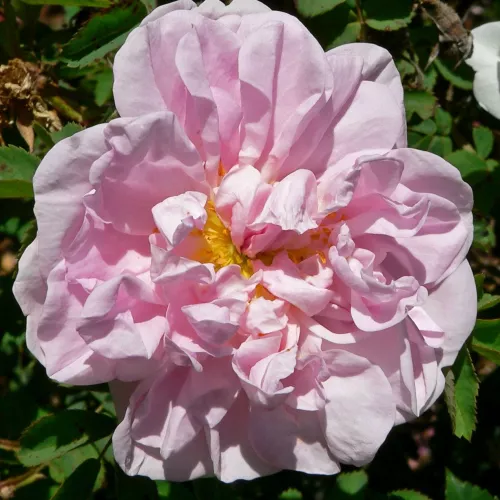
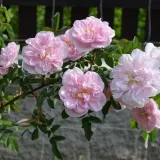
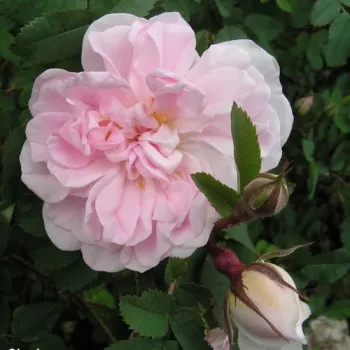
STANWELL PERPETUAL – pale pink wild rose – Brown
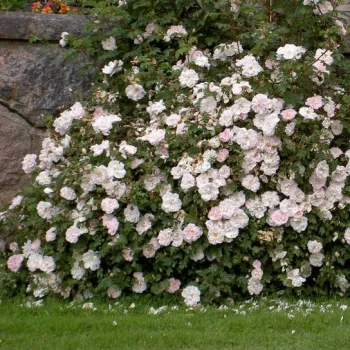
Step through your front gate and be greeted by perpetual bloom and deep, damask fragrance, carried on the air after rain in the small, sheltered spaces typical of British terraced gardens. STANWELL PERPETUAL forms a bushy, spreading shrub with dense, grey‑green foliage that copes reassuringly well with cool summers and the kind of damp, breezy weather that often challenges roses near the coast. Its heritage as a tough, old garden rose translates into modern ease: self‑cleaning flowers, reliable regrowth from its own roots, and a long working life with only modest care. Plant it once, water in well, then simply watch as year by year it knits into your sustainable front‑garden planting – Year 1 the roots establish, Year 2 the framework fills out, and by Year 3 you enjoy its full ornamental value with minimal intervention and a quietly balanced presence.
Usage options
| Target area |
Reasoning |
| Narrow terraced-house front garden |
The bushy, spreading habit and medium height create a gentle, enclosing screen without overwhelming a narrow frontage, while self-cleaning blooms keep the space looking tidy with very little deadheading for busy urban gardeners. |
| Low-maintenance flowering hedge |
Planted at the recommended hedging distance, STANWELL PERPETUAL knits into a dense, thorny barrier that flowers from early summer onwards, needing only an annual tidy to maintain shape for homeowners seeking easy structure. |
| Rainwater-friendly urban bed or border |
Its strong roots and tolerance of cool, damp conditions help it cope with heavier soils where water lingers after showers, supporting front gardens designed to slow and absorb rain for city gardeners managing runoff. |
| Mixed historic-style planting in small gardens |
The very double, rosette blooms and old-rose character blend beautifully with cottage perennials and shrubs, delivering classic charm on a compact footprint for romantic style enthusiasts. |
| Specimen shrub near paths and seating |
The very strong, garden-filling damask scent is best appreciated up close, so a single shrub by a path, doorway, or bench turns everyday routes into richly perfumed moments for fragrance-focused gardeners. |
| Clay or chalky suburban plots |
Once established, its robust shrub form and good heat and drought tolerance handle typical UK clay or chalk in family gardens, provided drainage is reasonable and watering is given in longer dry spells for practical, time-poor owners. |
| Large container on front step or patio |
In a 40–50 litre or larger container with peat-free compost, its moderate height and spreading shape create a soft, romantic focal point that can move with you if you change homes for renters and balcony gardeners. |
| Long-term backbone shrub in family garden |
As an own-root rose, it regenerates well from the base, preserving its character over many years, so even after hard pruning or weather damage it reliably grows back true to type for beginners wanting lasting value. |
Styling ideas
- Girly-edged path – Line a narrow front path with STANWELL PERPETUAL underplanted with soft pink asters and low nepeta to echo its pastel blooms – ideal for romantic city front-garden owners.
- Victorian hedge – Create a low, traditional hedge and weave in lavender or sage for contrast, letting the rose provide structure and scent – suited to lovers of historic character.
- Rain-kissed corner – Place a specimen near a downpipe-fed rain garden with moisture-tolerant perennials, where its foliage and flowers soften drainage features – good for sustainability-minded households.
- Container parlour – Grow one shrub in a large 50-litre terracotta pot with trailing thyme at the base for year-round texture – perfect for renters and balcony gardeners.
- Evening bench nook – Tuck a shrub behind a small bench, pairing it with silvery foliage plants so its fragrance becomes the main focus at dusk – great for after-work relaxers.
Technical cultivar profile
| Property |
Data |
| Name and registration |
STANWELL PERPETUAL is a botanical bush rose of Hybrid Perpetual, Damask and Spinosissima background, marketed as a pale pink wild rose type; it is an unregistered, historically established garden cultivar. |
| Origin and breeding |
Bred by C. Brown at Lee Nursery, Hammersmith–Stanwell, United Kingdom, from Rosa spinosissima × ‘Quatre Saisons’; raised around 1834 and introduced into commerce in 1838 in England. |
| Awards and recognition |
Holds the RHS Award of Garden Merit and is recommended by several historic and specialist rose gardens, confirming its dependable performance and ornamental value in long-term plantings. |
| Growth and structural characteristics |
Bushy, spreading shrub 80–130 cm high and 120–200 cm wide, with dense, matt grey‑green foliage and many prickles; generally self-supporting, forming an informal, softly rounded outline with age. |
| Flower morphology |
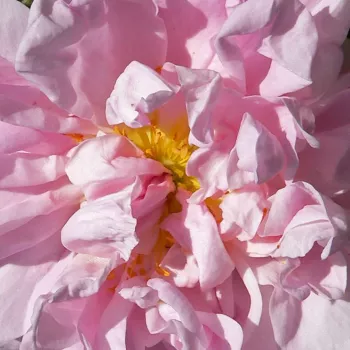
Very double rosette flowers, medium-sized at roughly 4–7 cm, usually borne in small clusters; petals exceed forty per bloom, with good self-cleaning so most spent flowers fall without deadheading. |
| Colour data and phenology |
Pale pastel pink tending towards white; buds creamy pink, opening powder pink, then milky white with a faint rim and finally porcelain white, fading faster in strong sun and holding more pink in cool weather. |
| Fragrance and aroma |
Possesses a very strong, garden-filling perfume of classic damask character; scent is most noticeable in still, humid air and close to paths, making it suitable for fragrance-focused plantings. |
| Hip characteristics |
Hip set is generally low because of the very double flowers, but occasional small spherical hips about 10–16 mm across may develop, maturing to a deep dark-crimson-black colour late in the season. |
| Resistance and winter hardiness |
Rated H7 and hardy to about −37 to −34 °C, surviving severe winters; tolerates heat and moderate drought, with medium resistance to common fungal diseases when grown with adequate air circulation. |
| Horticultural recommendations |
Best at 90–165 cm spacing depending on use; suits hedges, specimen shrubs, mixed beds and urban green spaces, in sun or partial shade, with medium maintenance and occasional pest and disease checks. |
STANWELL PERPETUAL offers romantic fragrance, self-cleaning blooms and a long-lived, regenerating own-root shrub form; consider it if you would like a quietly reliable rose for years to come.