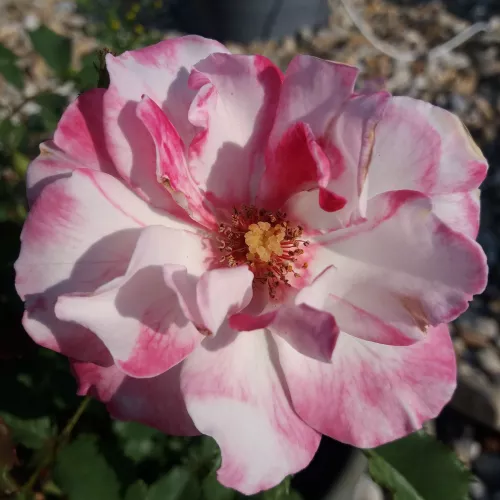
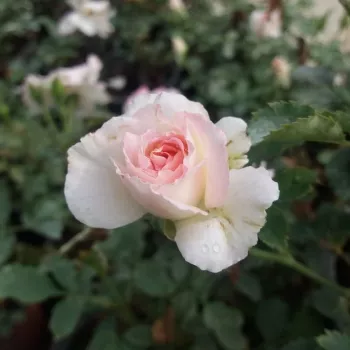
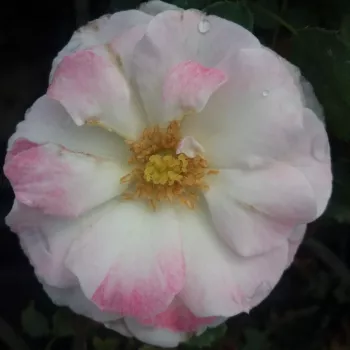
TANELAIGIB – white-pink bedding floribunda rose
Imagine your front garden after rain, paths still damp, petals beaded with water: this compact floribunda brings a sense of balance to small London spaces while quietly supporting sustainability through durable, own-root growth. Its bushy shape and neat height make maintenance straightforward, even where space and time are limited, and its remontant flowering provides relaxed continuity of blossom from early summer well into autumn. Well-suited to UK gardens where heavy showers and coastal winds meet imperfect drainage, it rewards a little planning with reliable resilience and long-term stability. In Year 1 it concentrates on roots, Year 2 on fuller shoots, and by Year 3 you enjoy its complete ornamental presence woven into your everyday routine.
Usage options
| Target area |
Reasoning |
| Small front garden bed |
The compact, bushy habit and modest height fit neatly into narrow terraced-house front gardens, giving a structured, calm look without overwhelming the space, ideal for low-fuss kerb appeal for the busy homeowner. |
| Low flowering hedge |
Planted at closer spacing, the dense foliage and consistent form create a tidy, low hedge that defines boundaries while remaining easy to reach for light pruning, suiting the practical garden-planner. |
| Mixed perennial border |
Clustered, repeat-flowering heads of pink blend well with perennials and herbs, offering season-long colour that knits gaps together with minimal intervention for the relaxed border-gardener. |
| Container on patio or balcony |
In a large 40–50 litre peat-free container, this compact rose forms a rounded shrub that is simple to water with collected rain and easy to access for the occasional trim, perfect for the urban balcony-owner. |
| Family-friendly play-side planting |
The manageable height and bushy shape keep flowers close to view while avoiding tall, top-heavy growth, giving soft colour near seating or play areas for the family-focused gardener. |
| Part-shaded city courtyard |
Its tolerance of partial shade and steady, medium maintenance needs make it suitable for light-limited, paved courtyards where moisture lingers after showers and drainage is imperfect for the city courtyard-owner. |
| Informal rose-and-herb bed |
The soft pink tones pair naturally with low herbs, while own-root durability supports a long-lived planting that can be lightly reshaped over years without replanting, appreciated by the sustainability-minded gardener. |
| Rainwater-managed front garden |
Stable, compact growth copes well where downpipes, heavy rain and uneven run-off meet in small front plots with challenging drainage, assisting simple, resilient layouts for the rain-conscious homeowner. |
Styling ideas
- Terrace-Ribbon – Plant in a single drift along a narrow front boundary, underplanted with creeping thyme to soften the edge and give scent underfoot – for design-aware terraced-house owners.
- Courtyard-Cushion – Use three plants in a generous square container with peat-free compost, encircled by low lavender cotton for silvery contrast – for balcony and patio container gardeners.
- Pastel-Drift – Combine in a small bed with soft nepeta and pale geraniums to create a hazy, romantic look that flowers over a long season – for lovers of gentle, “girly” garden colour.
- Herb-Lattice – Arrange plants in a loose grid with creeping thyme weaving between, letting the rose provide structure while herbs handle groundcover – for low-maintenance, edible-ornamental fans.
- Playcorner-Frame – Frame a seating or play space with a low curve of these roses, backed by taller shrubs, to give colour at child’s-eye level without dominating – for family garden planners.
Technical cultivar profile
| Parameter |
Data |
| Name and registration |
Floribunda bed rose; registered as TANelaigib, also marketed as Tanelaigib Bedding rose TANelaigib and exhibited as Abigaile, within the Bedding rose collection for shrub and bedding displays. |
| Origin and breeding |
Bred by Hans Jürgen Evers at Rosen Tantau, Uetersen, Germany; introduced and registered in 1988, with parentage not recorded, reflecting classic late-20th-century floribunda breeding aims. |
| Growth and structural characteristics |
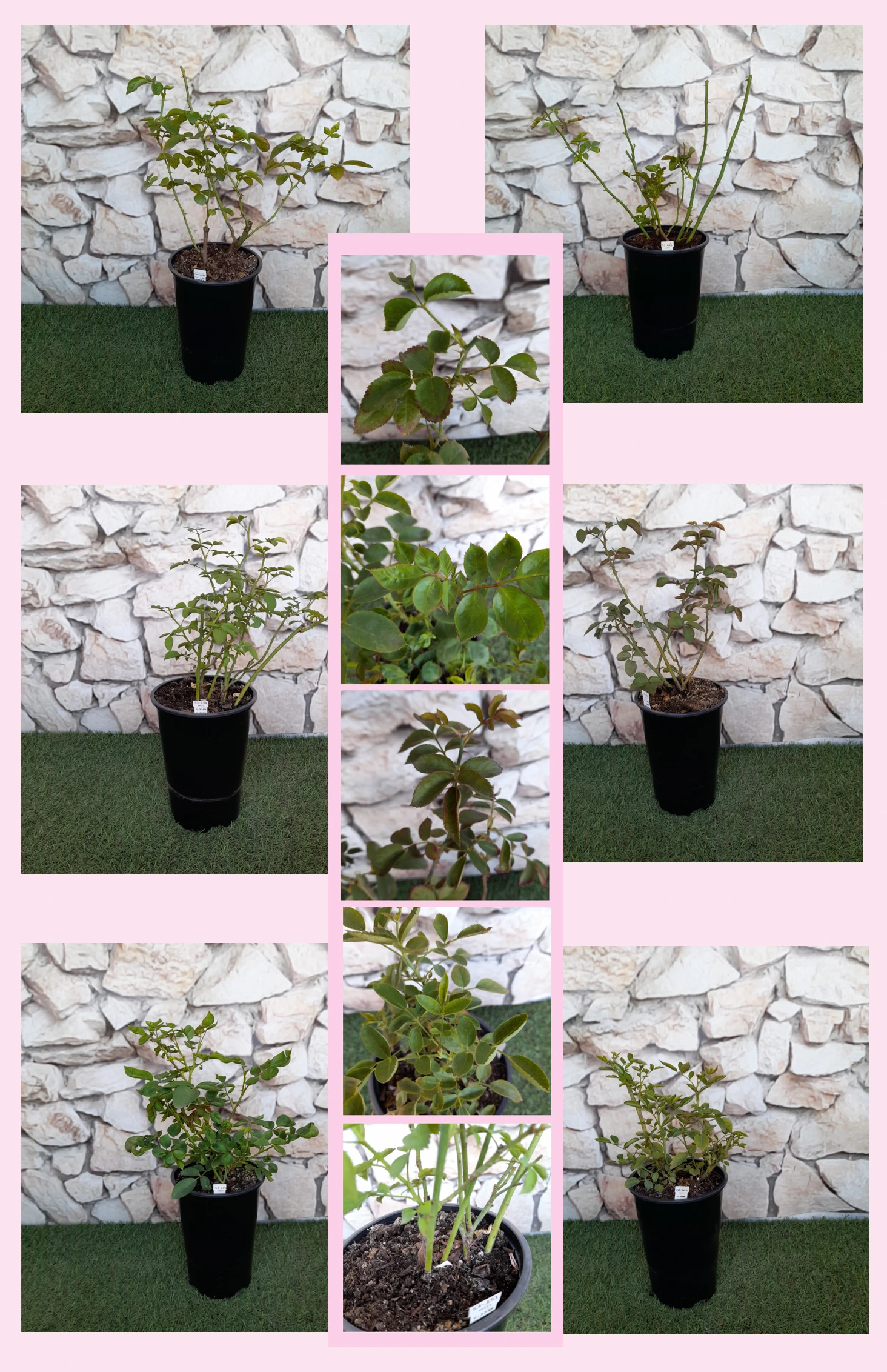
Compact, bushy shrub around 40–55 cm high and 35–50 cm wide, with dense, glossy medium to dark green foliage and moderate prickles, ideal for small beds, edging and containers in family gardens. |
| Flower morphology |
Medium-sized, cupped, double flowers with 13–25 petals, carried in clusters; remontant with a generous second flush, though spent blooms benefit from deadheading as self-cleaning is relatively weak. |
| Colour data and phenology |
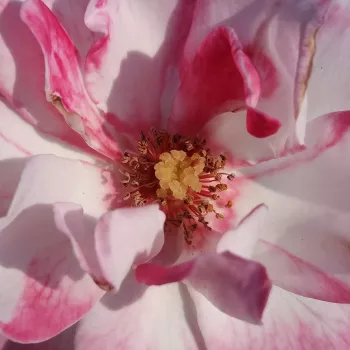
Soft, silvery pink base with darker pink edging; buds open deep carmine-pink, then lighten to pastel pearly tones before fading; ARS PB, RHS 62C outer and 62A inner, with moderate colour retention in sun. |
| Fragrance and aroma |
Soft, discreet fragrance of mild intensity, giving a gentle rather than overpowering scent; suitable near paths, seating and entrances where subtle perfume is preferred over strong, dominant aromas. |
| Hip characteristics |
Occasional small, spherical bright red hips, about 7–10 mm wide, appearing where flowers are not deadheaded; decorative in autumn but usually secondary to its primary role as a long-flowering bed rose. |
| Resistance and winter hardiness |
Rated H7, hardy to approximately –21 to –18 °C and USDA zone 6b; disease resistance is medium overall, with good black spot resistance and moderate tolerance of powdery mildew and rust. |
| Horticultural recommendations |
Best in beds, borders and large containers; medium maintenance with some plant protection and deadheading; suitable for partial shade; mass planting at 30 cm, hedging at 25 cm, specimens at 45 cm spacing. |
TANELAIGIB offers compact structure, repeat soft-pink flowering and durable own-root growth, making it a calm, long-lived choice for UK front gardens and patios that you may confidently consider for your next planting plan.