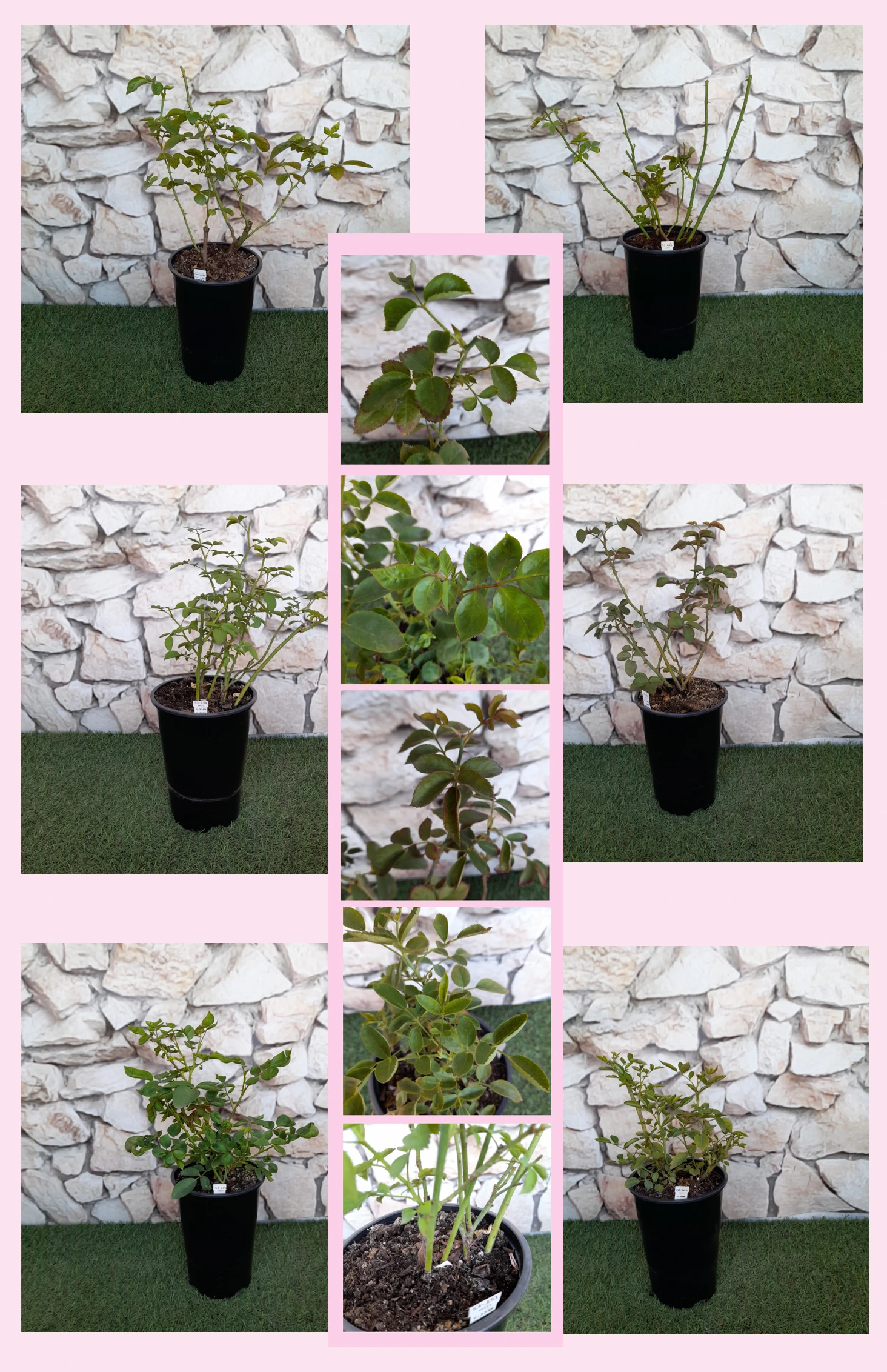
MARIA TERESA – light pink flowerbed floribunda rose – Lens
Step through your front gate and along a narrow path lined with Maria blooms, their porcelain-pink cups held on a compact framework that fits neatly into a small London terrace or courtyard. This floribunda creates a tranquil sense of balance, its medium-sized clusters flowering reliably in generous flushes through the season, even where summers bring shifting patterns of showers and sun with changeable winds and frequent rain challenging flower quality. Well-suited to peat-free planting mixes and simple mulching, it settles steadily into heavier soils when drainage is improved, rewarding patient care with sturdy, long-lived growth. As an own-root shrub, it can quietly regenerate after minor mishaps and pruning, keeping its shape and flower quality year after year. In an average family garden, you can use it as a low hedge, a softly coloured specimen near a doorway, or mass-planted for calm, feminine bedding impact along your rainwater-friendly front border.
Usage options
| Target area |
Reasoning |
| Front garden flowerbed in a small city terrace |
Its compact 60–85 cm height and 50–70 cm spread make it ideal for neat front beds where space is limited, giving a calm, “girly” look of soft light-pink clusters without overwhelming the façade, for the design-conscious beginner homeowner. |
| Low informal hedge along a narrow path |
Planted at 35–40 cm intervals, it forms a low, airy hedge with moderately dense foliage and corymbs of cupped blooms that guide the eye along the path, echoing the feel of walking a narrow route in post-rain fragrance, suiting path-focused gardeners. |
| Specimen rose in a 40–50 litre container |
In a large peat-free container of at least 40–50 litres, this own-root shrub keeps a stable, compact structure, with moderate self-cleaning so you only need light deadheading, ideal for busy balcony or doorstep residents. |
| Romantic “girly” bedding block with soft perennials |
Used in groups at 5–7 plants per m², it creates a porcelain-pink carpet that pairs beautifully with airy companions like threadleaf coreopsis or thorow-wax, giving a romantic, feminine effect welcomed by colour-sensitive designers. |
| Rainwater-friendly urban border with improved drainage |
In front gardens where downpipes or surface run-off feed beds, it copes well when drainage in heavier clay is improved, holding flower quality even as changeable winds and frequent rain challenge flower quality, appreciated by sustainability-minded owners. |
| Heat-tolerant accent in a sunny family garden |
Good heat and moderate drought tolerance mean it carries its soft pink colour well through warmer spells, provided you water in extended dry periods, making it a reassuring choice for climate-aware family planters. |
| Long-term structural planting in a mixed border |
As an own-root floribunda, it builds a durable framework that can be pruned back and refreshed over many years without graft worries, suiting those who want a long-lived, reliable feature in evolving borders. |
| Fragrant focal point near a seating area |
Placed close to a bench or front step, its medium-strength fruity-honey scent and repeated flushes provide gentle sensory interest over the season, rewarding modest maintenance by fragrance-loving urban beginners. |
Styling ideas
- Pastel-Pathway – Line both sides of a narrow front path with MARIA TERESA at hedge spacing, underplant with low thyme for softness – for townhouse owners seeking a feminine welcome.
- Balcony-Show – Plant one shrub in a 50 litre container with trailing nepeta and peat-free compost to frame a French window – for flat dwellers wanting easy romance in limited space.
- Porcelain-Border – Mass-plant in a front bed and weave between drifts of threadleaf coreopsis and rosemary for subtle contrast – for designers who enjoy soft colour with structure.
- Doorstep-Jewel – Use a single specimen by the front door, edged with lavender for scent and bees, to create a calm entry focus – for busy homeowners wanting simple impact.
- Rain-Garden-Ribbon – Run a band of MARIA TERESA along a downpipe-fed bed with gravelled swales and clay improved by compost – for sustainability-minded gardeners managing rainwater gracefully.
Technical cultivar profile
| Property |
Data |
| Name and registration |
Floribunda bed rose registered as LENmacra, traded as Maria Teresa Bedding rose LENmacra; shrub/floribunda exhibition category, light pink flowerbed type with double blooms. |
| Origin and breeding |
Bred by Louis Lens, Lens Roses, Belgium; breeding year 1982, introduced and registered in 1984, with Lens Roses as initial distributor for European garden use. |
| Awards and recognition |
Recognised at the Baden bei Wien Austrian Rose Trial in 1991, achieving a 5th prize, indicating ornamental merit and garden performance under Central European trial conditions. |
| Growth and structural characteristics |
Compact, moderately thorny shrub reaching about 60–85 cm in height and 50–70 cm spread, with moderately dense, mid-green slightly glossy foliage forming a tidy, low-maintenance outline. |
| Flower morphology |
Double, cup-shaped flowers with 26–39 petals in corymbose clusters, large-flowered (approximately 2.75–3.95 inches), remontant with a generous second flush after the main flowering. |
| Colour data and phenology |
Light-pink, porcelain-like blooms (RHS 65D–65C) with a pearly sheen; colour lightens gradually, becoming almost white with a silvery veil while retaining good overall colour stability before petal drop. |
| Fragrance and aroma |
Medium-strength, noticeable scent with a delicate fruity-honey character; best appreciated at close range near seating or paths, adding a gentle olfactory layer without overwhelming nearby plantings. |
| Hip characteristics |
Rose hip set is generally limited due to double flowers; where pollination succeeds, produces occasional small, spherical red hips about 6–10 mm in diameter, of mainly ornamental winter interest. |
| Resistance and winter hardiness |
Hardy to approximately −21 to −18 °C (RHS H7, USDA 6b, Swedish zone 3); heat tolerant with moderate drought resistance, though disease sensitivity requires attentive, regular plant protection. |
| Horticultural recommendations |
Best in sunny to lightly shaded beds with improved drainage; suitable for mass planting or low hedges at 35–40 cm spacing, and for own-root container culture in at least 40–50 litre pots with peat-free media. |
MARIA TERESA brings compact growth, romantic porcelain-pink blooms and a gentle fragrance in an own-root form that supports long-term, easily refreshed planting, making it a thoughtful choice if you favour calm, enduring structure in your garden.