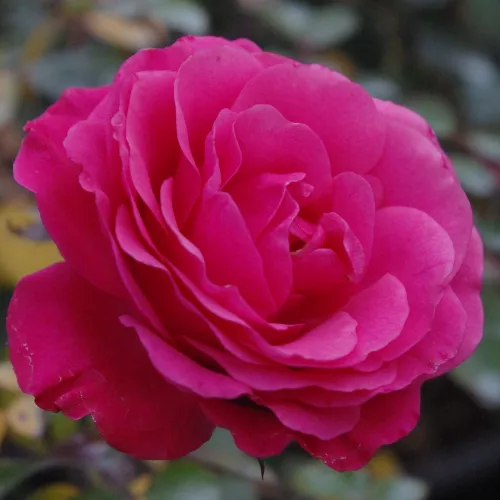
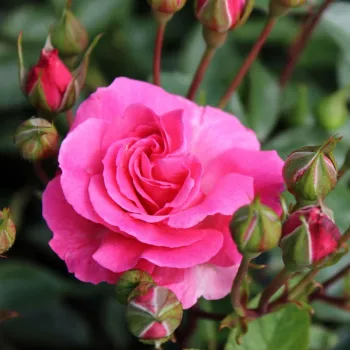
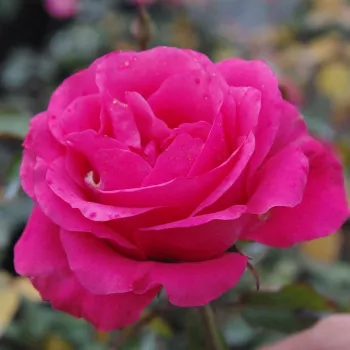
TOM TOM™ – deep pink bedding floribunda rose
Step out to a front garden that feels instantly balanced: TOM TOM™ lines narrow paths with deep pink, semi-double clusters that repeat steadily through the season, even where summers are cool and humid. Its bushy, upright habit stays neat in small urban spaces, and moderate self-cleaning means less time spent deadheading and more quiet strolls after rain. As an own-root shrub it matures steadily, building a long-lived framework that copes well with typical city conditions and supports low-input, rainwater-friendly planting. In year one it concentrates on roots, by year two you see stronger shoots, and by year three it settles into full ornamental impact. Light, discreet fragrance and moderate pollinator interest suit a family street setting, where you want colour and calm more than intense perfume. Ideal for edging, containers or coordinated planting with lavender and sage, TOM TOM™ offers easy-care structure for busy gardeners who still value thoughtful sustainability.
Usage options
| Target area |
Reasoning |
| London terraced-house front garden edging |
The compact 60–90 cm height and 45–65 cm spread create a tidy, low hedge that frames small front gardens without overwhelming them, giving reliable path-side colour and structure for busy urban gardeners |
| Rainwater-friendly deep container on balconies or paved yards |
In a 40–50 litre pot with free-draining, peat-free compost, TOM TOM™ repeats flower well, coping with heavy showers and short dry spells when watered with stored rainwater, suiting sustainability-minded beginners |
| Mixed pollinator-friendly planting with perennials |
Semi-double blooms offer moderate pollinator support while deep pink clusters combine well with lavender, nepeta or sage, giving a softer, wildlife-aware border for family garden owners |
| Low-maintenance bedding and group plantings |
Floribunda clusters, moderate self-cleaning and medium maintenance needs give a long season of colour with straightforward care, ideal where you want reliable results for time-pressed home gardeners |
| Urban green spaces and front-of-house planting |
Bushy, upright growth and moderate disease resistance, including good black spot resistance, make it a resilient choice for exposed street settings and shared spaces used by community-focused residents |
| Small family gardens on heavier or wetter soils |
Once established on improved soil with good drainage, its own-root robustness and steady framework suit typical British plots that see wind, showers and cool, damp spells experienced by UK household gardeners |
| Informal flowering hedge or path divider |
At 35–45 cm spacing, plants join into a low, flowering line that subtly separates driveway, lawn and play areas while remaining easy to prune and refresh for practical-minded parents |
| Long-term planting for evolving family gardens |
The own-root habit helps the shrub regenerate after hard pruning or weather damage, supporting a gradual build-up of character and colour that fits changing household needs for long-view garden planners |
Styling ideas
- Front-Garden Ribbon – run a single line of TOM TOM™ along a short terraced-house path, underplanted with low thyme, for a neat, “girly” pink welcome – ideal for small-space homeowners
- Balcony Statement – plant one shrub in a 50-litre pot with trailing ivy and white bacopa to soften railings while keeping maintenance simple – suited to first-time balcony gardeners
- Pink-and-Purple Drift – mix TOM TOM™ with lavender and nepeta in a narrow bed for a soft, romantic colour blend that still looks ordered – perfect for style-conscious city dwellers
- Family-Friendly Border – group several plants with coreopsis and compact grasses to create a resilient, flower-rich strip that copes with play and pets – good for young families
- Smart Shared Entrance – pair TOM TOM™ with small Ilex crenata balls in gravel for a clean, low-mow, rainwater-friendly frontage – appealing to residents of converted townhouses
Technical cultivar profile
| Property |
Data |
| Name and registration |
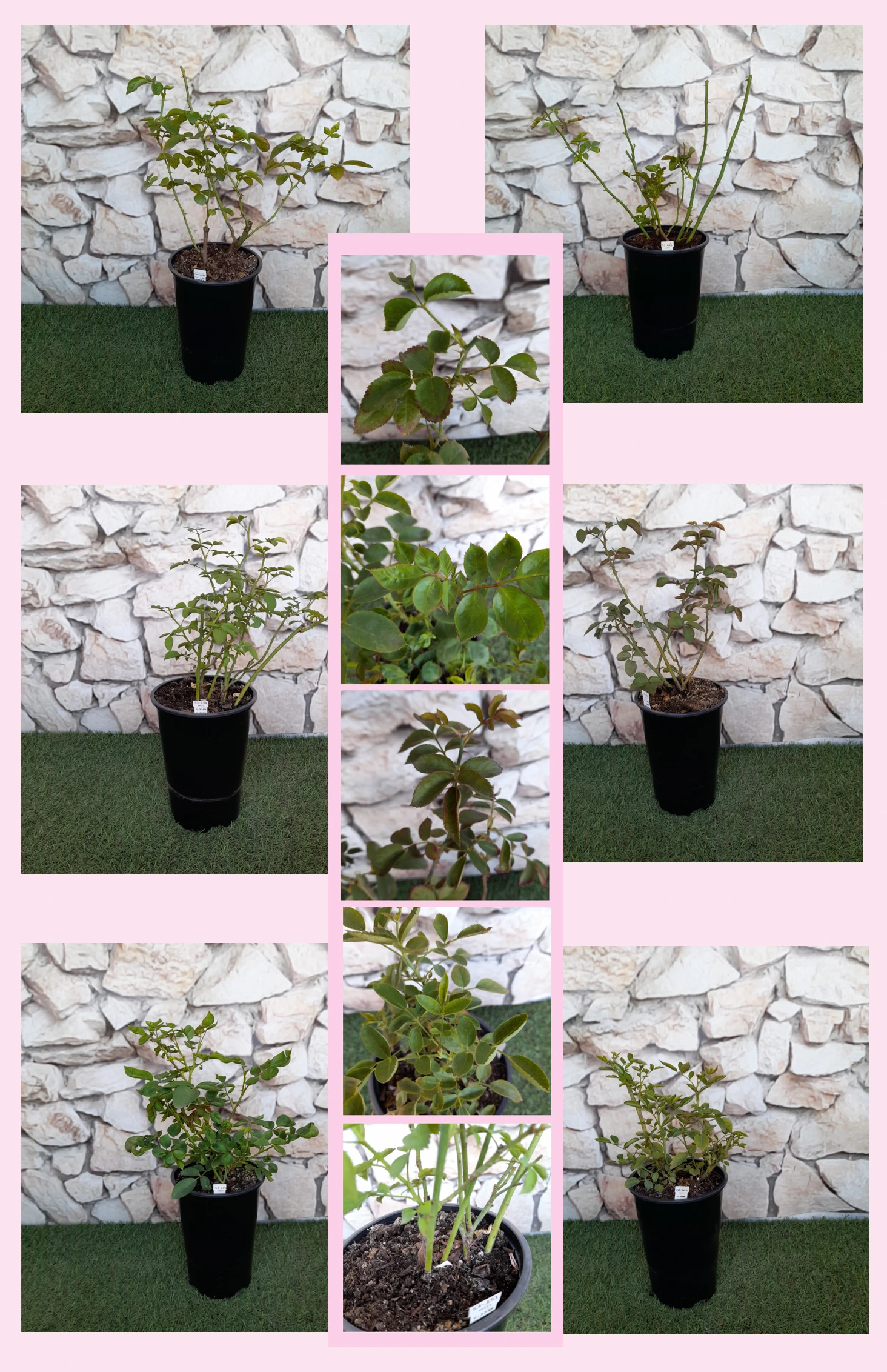
Tom Tom (registered cultivar name), trade name TOM TOM™ Bedding rose Tom Tom; floribunda bed rose for borders and flowerbeds, exhibition floribunda category, own-root 2-litre container form. |
| Origin and breeding |
Bred by E. J. Lindquist, USA, 1957, from ‘Improved Lafayette’ × ‘Floradora’; introduced by Howard Rose Co., Hemet Wholesale origin; unregistered variety used mainly as a practical bedding floribunda. |
| Growth and structural characteristics |
Bushy, upright shrub to around 60–90 cm high and 45–65 cm wide, moderately thorny, with moderately dense, dark green, slightly glossy foliage suitable for edging, bedding and small-scale hedging. |
| Flower morphology |
Semi-double, cup-shaped cluster-flowered blooms, 17–25 petals, large size around 7–10 cm; remontant, giving an initial flush followed by a generous second flowering and further smaller repeats. |
| Colour data and phenology |
Uniform deep pink flowers, ARS code dp; outer petals RHS 58B, inner 58C; buds dark velvety pink; colour fades slightly in heat but remains richer in cooler weather, maintaining good garden presence. |
| Fragrance and aroma |
Light, discreet fragrance with a mild, restrained rose scent; noticeable at close range rather than across the garden, suiting users who prefer colour impact over strong perfume in compact spaces. |
| Hip characteristics |
Moderate production of small, spherical hips, 7–11 mm diameter, red RHS 44A; ornamental interest is subtle rather than dominant and may be reduced by routine deadheading for repeat flowering. |
| Resistance and winter hardiness |
Hardy to about −21 to −18 °C (RHS H7, USDA 6b, Swedish Zone 3); disease resistance moderate overall with good black spot resistance but moderate susceptibility to powdery mildew and rust. |
| Horticultural recommendations |
Best in borders, parks, edges, containers and group plantings at 35–70 cm spacing; tolerates partial shade, average soils and urban conditions, with occasional pest and disease control as needed. |
TOM TOM™ offers compact, repeat deep-pink flowering, adaptable small-garden structure and the regenerative reliability of an own-root plant, making it a thoughtful long-term choice for understated urban front gardens.