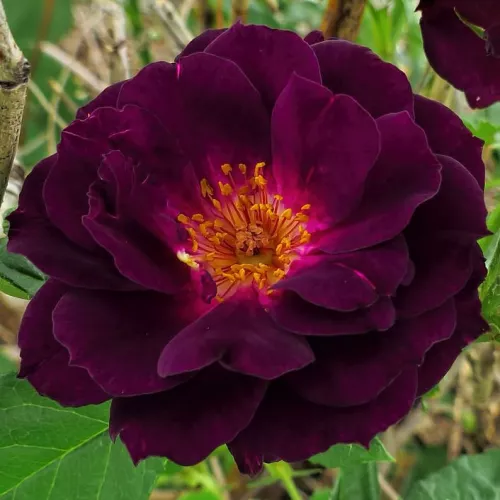
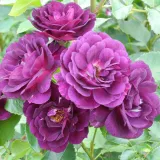
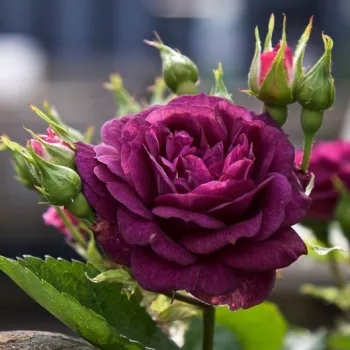
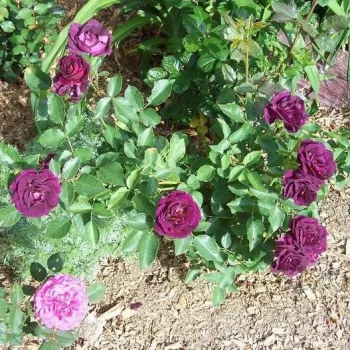
Wekfabpur – dark crimson bedding floribunda rose
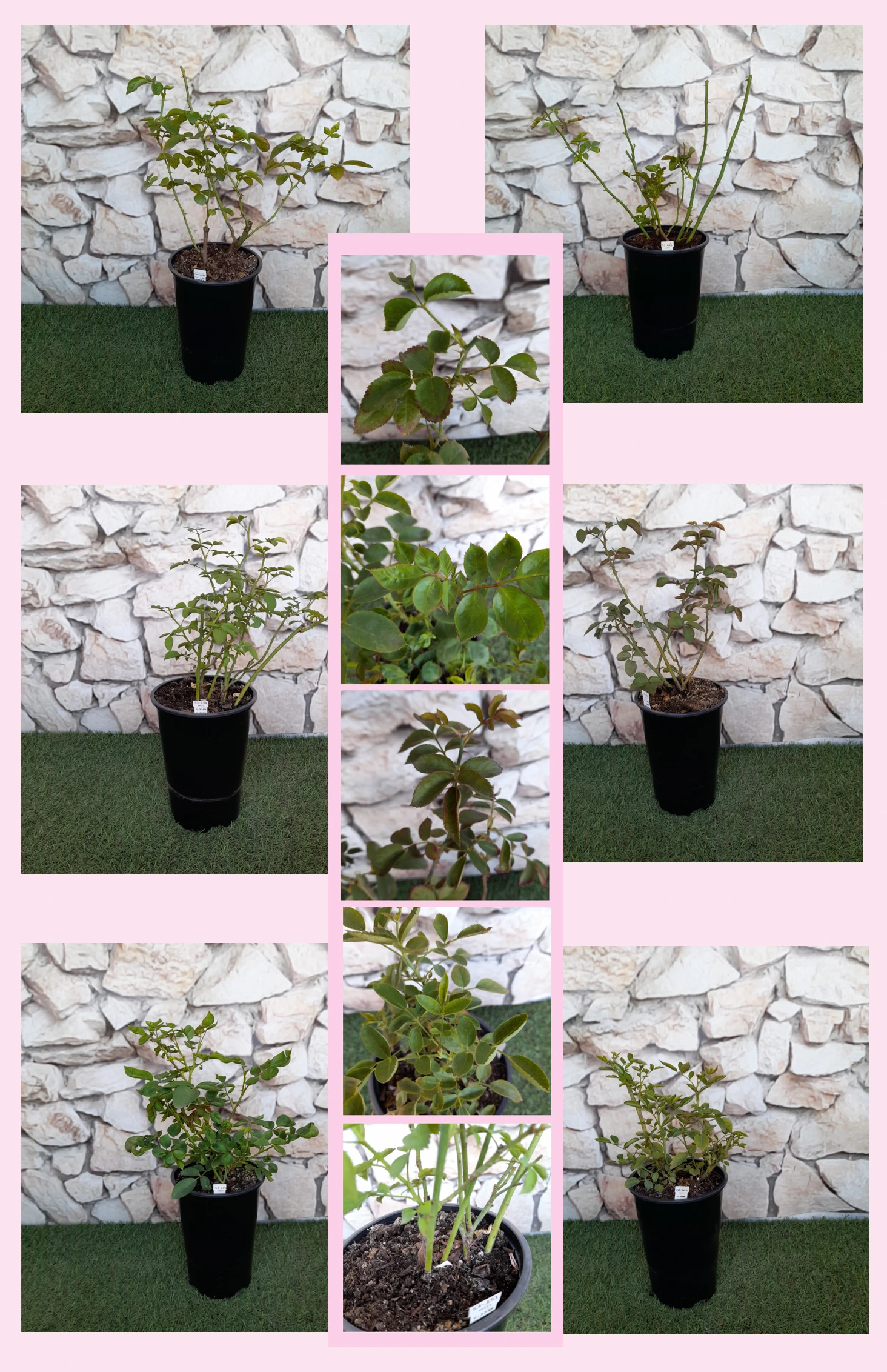
In a compact London front garden or balcony, this deep, velvety floribunda brings an almost midnight glow to summer evenings, its clusters of flowers releasing a rich, clove-like fragrance after rain. The bush stays naturally compact and well-shaped, so there is little pruning beyond a light tidy, while its proven disease resistance keeps foliage clean in damp, changeable weather. Own-root plants build strength steadily and can regenerate from the base if stems are damaged, supporting a long, reliable garden lifespan. In the first year it focuses on roots, the second on strong new shoots, and by the third it reveals its full ornamental impact. Its remontant flowering habit keeps beds and containers colourful over a long season, pairing beautifully with lavender and nepeta for a soft, sustainable border feel. The shrub’s moderate size works neatly beside front paths and parking spaces where good drainage helps manage heavier clay or rainwater run‑off.
Usage options
| Target area |
Reasoning |
| Front garden bedding strip |
Ideal for narrow, street-facing beds where space is limited but you still want drama: compact, 80–110 cm shrubs carry rich dark-crimson clusters and need only light seasonal pruning – reassuring for the beginner. |
| Urban containers and large pots |
Performs well in a generous 40–50 litre pot with consistent watering, giving repeat flushes of scented flowers while its neat habit keeps small terraces and balconies orderly – helpful for the busy homeowner. |
| Low-maintenance family flower bed |
Disease-resistant foliage and low intervention needs make it suitable for family gardens where time is short, yet colour and scent are expected all summer – attractive for the time-poor gardener. |
| Rain-friendly, clay-based planting schemes |
Works in improved heavy clay with added drainage, fitting schemes where beds help slow and absorb run-off from paved areas in wet, windy neighbourhoods – practical for the urban planner. |
| Long-term structural planting |
As an own-root rose it rebuilds from the base if cut back hard, offering a dependable, long-lived feature that matures steadily into a full, flowering shrub – reassuring for the long-term owner. |
| Repeated seasonal colour focus |
Remontant flowering provides a strong second flush after the first display, keeping borders lively from early summer into autumn with little more than deadheading – appealing to the colour-seeker. |
| Evening seating and scent corners |
Strong spicy, clove fragrance intensifies in still, humid air, making it ideal beside a bench or doorway where you pass close and notice the scent daily – rewarding for the sense-driven gardener. |
| Compact mixed shrub and perennial border |
Its balanced, compact structure fits easily among perennials like lavender, sage or nepeta, adding depth of colour without overwhelming neighbouring plants – useful to the small-garden designer. |
Styling ideas
- Twilight – pair with lavender and silver foliage for a moody dusk palette – ideal for small city front gardens seeking atmosphere.
- Contrast – plant against pale gravel or paving to make the dark blooms glow – suitable for contemporary terraces and balconies.
- Cottage – mix with nepeta and soft pink perennials for a relaxed, informal bed – perfect for family gardens wanting gentle charm.
- Formal – use in repeating groups along a path for a low, scented edging – recommended for neat, ordered urban frontages.
- Container – combine in a 50 litre pot with trailing thyme and compact sage – useful for renters and balcony gardeners needing moveable planting.
Technical cultivar profile
| Property |
Data |
| Name and registration |
Floribunda bedding rose, registered as WEKfabpur, marketed as Wekfabpur dark crimson bedding floribunda rose; ARS exhibition name ‘Midnight Blue’, for shrub, garden and exhibition use. |
| Origin and breeding |
Bred by Thomas F. Carruth (USA, 2004) from complex purple and hybrid parents; introduced by Weeks Wholesale Rose Grower Inc after 2006, registered 2006 under US plant patent PP16623. |
| Awards and recognition |
Honourable Mention, Australian National Rose Trial Garden 2004, and Gold Medal at Rose Hills International Rose Trials 2006, reflecting ornamental appeal and reliable garden performance. |
| Growth and structural characteristics |
Compact, upright shrub reaching about 80–110 cm high and 50–70 cm wide, with dense, slightly glossy green foliage (RHS 147A) and relatively sparse prickles, suiting beds and containers. |
| Flower morphology |
Semi-double, cup-shaped blooms with 13–25 petals, produced in clusters of medium-sized flowers; remontant habit with abundant repeat, giving strong second flushes in suitable conditions. |
| Colour data and phenology |
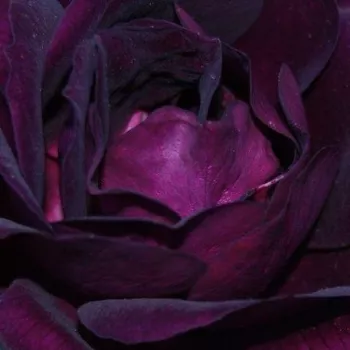
Velvety dark crimson blooms with blackish-purple tones and slight purplish sheen; colour deepens then lightens slightly in strong sun, staying richer in cooler weather; ARS code m, RHS 79A and 72A. |
| Fragrance and aroma |
Notable, strong clove-like, spicy fragrance that is easily perceptible near seating areas; fragrance character makes it suitable where scent is a priority in compact gardens or containers. |
| Hip characteristics |
Hip production is minimal; occasional very small hips of around 0–4 mm diameter may form due to semi-double flowers, so ornamental display is rarely affected by fruiting. |
| Resistance and winter hardiness |
Rated H7 and hardy to approximately –26 to –23 °C; resistant to powdery mildew, black spot and rust; flowers through warm spells if watered regularly during extended droughts. |
| Horticultural recommendations |
Suited to beds, edging, containers and small specimen use; plant 35–65 cm apart depending on effect, allow 5.7–6.6 plants/m² in groups; thrives in sun or light shade with reasonable drainage. |
Wekfabpur offers compact, repeatedly flowering, richly scented colour on a durable own-root framework that settles in for years of reliable performance, making it a thoughtful choice for small, low-maintenance gardens and terraces.