WEKSMOPUR – plum-lilac bedding floribunda rose
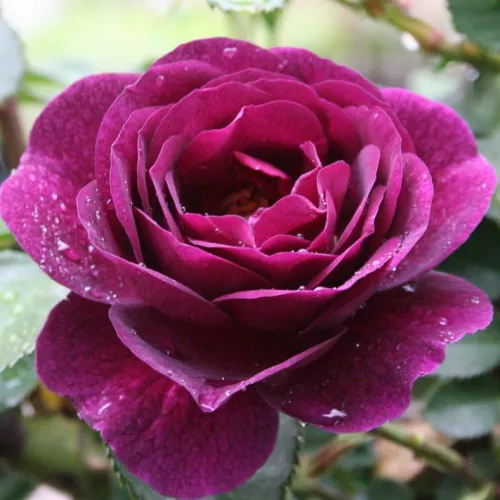
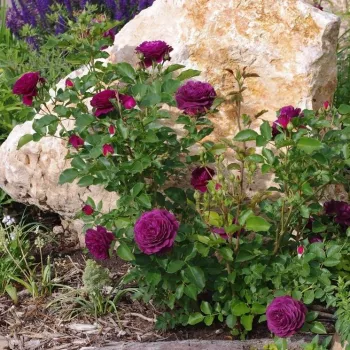
Step out after rain and this compact floribunda greets you with velvety blooms in a deep, smoky plum-lilac that seem to hover over glossy foliage, quietly managing humidity and coastal breezes with reassuring disease resistance. Its strong, spicy-citrus fragrance hangs in the air along a narrow London front path, while low-maintenance, own-root stability means you can enjoy repeat flowering with little more than deadheading and regular watering in dry spells. In a peat-free bed or a 40–50 litre container, the rose gradually builds a long-lived structure: roots in the first year, vigorous shoots in the second, and fuller ornamental impact by the third, with moderate hips for autumn interest and a quietly sustainable backyard presence.
Usage options
| Target area | Reasoning |
|---|
| Front garden bed for small London terraces |
The compact, bushy habit fits narrow beds without overwhelming the space, while the deep plum-lilac flowers create an immediate focal point against brick or railings, suiting busy urban householders seeking an easy yet distinctive rose for a modest family plot beginner-gardeners |
| Rainwater-friendly mixed planting by the front path |
Placed in a free-draining border that accepts roof run-off, this rose offers reliable flowering and strong disease resistance even through wet, breezy spells, helping you make the most of rainfall rather than rely on constant watering in a climate of changeable showers and gusts sustainability-minded-owners |
| Statement container (40–50 litres) near the door |
In a large, well-drained pot, its dense foliage and repeat blooms provide year-round structure and seasonal colour, while own-root resilience means the plant recovers well if growth is checked by winter or a missed watering, supporting long-term use without frequent replacement busy-urban-owners |
| Low-maintenance family flower bed |
The combination of compact growth, sparse thorns and good resistance to black spot, mildew and rust keeps everyday care straightforward, mainly limited to deadheading and basic feeding, so the rose remains attractive for years without demanding specialist pruning knowledge time-poor-families |
| Fragrant seating corner or balcony nook |
Strong, clearly perceptible spicy-citrus scent makes this cultivar ideal beside a bench or balcony chair, where even a few clustered blooms perfume the air, letting you enjoy evening relaxation without needing a large planting area or intensive gardening routine scent-lovers |
| Pollinator-conscious, ornamental planting |
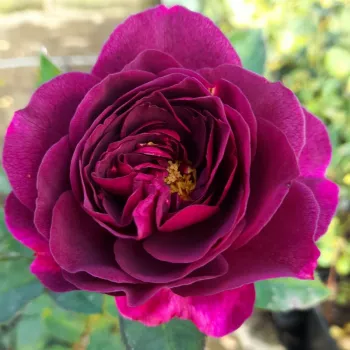
Although double-flowered, the visible stamens still offer moderate interest to visiting insects, allowing you to combine decorative, velvety blooms with some wildlife value, especially when paired with nectar-rich companions that enhance both biodiversity and garden charm eco-aware-gardeners |
| Long-lived structural rose in a compact scheme |
As an own-root plant, it regenerates reliably from the base, avoiding graft suckers and maintaining its true colour and form over time, so a small number of bushes can anchor a front garden design for many seasons with stable ornamental value and minimal replanting |
| Autumn interest in mixed borders |
After the main flowering period, moderate numbers of small, orange-red hips extend the season, catching low light and pairing well with late perennials or grasses, so the planting still looks considered and alive even as the rest of the garden begins to wind down four-season-planners |
Styling ideas
- Midnight-terrace-edge – Line a narrow front bed with this rose and a low underplanting of silver thyme for contrast and scent – ideal for small-city homeowners wanting simple edging.
- Rain-kissed-entry – Combine the rose with nepeta and ornamental grasses in a free-draining, rain-fed strip by the path – for eco-conscious gardeners managing roof run-off gracefully.
- Perfumed-doorstep – Plant one specimen in a 50-litre clay pot with trailing ivy to frame the front door – suited to flat-dwellers and terrace owners craving fragrance in limited space.
- Evening-scent-corner – Pair with lavender and sage around a seating area so layered fragrance and muted purple tones welcome you after work – perfect for busy professionals seeking low-effort calm.
- Autumn-glow-border – Weave among late asters and feather reed grass so hips and smoky blooms play against golden seed heads – for design-led gardeners chasing long seasonal interest.
Technical cultivar profile
| Parameter | Data |
|---|
| Name and registration |
Floribunda bedding rose registered as WEKsmopur, marketed under names including Ebb Tide; bush-type fragrant floribunda in the Bedding rose collection, premium gold authenticity-verified cultivar. |
| Origin and breeding |
Bred in the United States by Thomas F. Carruth (Weeks), from complex hybrid parentage involving ‘Sweet Chariot’, ‘Blue Nile’, ‘Stephen’s Big Purple’ and Rosa soulieana derivatives; introduced and registered in 2006. |
| Awards and recognition |
Certificate of Merit at the National Rose Trial Garden of Australia in 2005 and Most Fragrant Rose at the Rose Hills International Rose Trials, USA, in 2011, confirming both ornamental and scent quality. |
| Growth and structural characteristics |
Compact, bushy habit reaching about 60–85 cm high and 50–70 cm wide, with dense, dark green glossy foliage and relatively sparse prickles; suitable for beds, hedging rhythm and large containers. |
| Flower morphology |
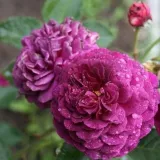
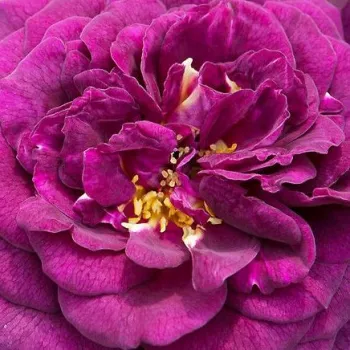
Double, cup-shaped blooms with 26–39 petals, usually in clusters of 1–5 per stem, large-flowered for a floribunda and strongly remontant, giving an abundant second flush when lightly deadheaded. |
| Colour data and phenology |
Deep plum-lilac flowers with a subtle smoky tone, darker buds and paler petal bases; colour intensifies in cooler conditions but may fade somewhat in strong sun, offering varied, nuanced purple-violet displays. |
| Fragrance and aroma |
Strong, clearly perceptible fragrance with a distinctive spicy-citrus character; ideal for seating areas and entrances where air movement carries the scent, and valued by collectors of notably perfumed cultivars. |
| Hip characteristics |
Forms moderate quantities of small, spherical hips, about 12–16 mm across, in orange-red shades (RHS 28B–30B), providing subtle autumn interest and a naturalistic finish if spent blooms are not removed. |
| Resistance and winter hardiness |
Rated H7 with hardiness down to around –21 °C, performing reliably in USDA zone 6b and Swedish zone 3; shows good resistance to powdery mildew, black spot and rust in typical UK garden conditions. |
| Horticultural recommendations |
Best in full sun with well-drained, improved soil; water during prolonged dry periods and deadhead for repeat bloom. Space 50–100 cm depending on use; suitable for beds, edging, hedges, containers and cutting. |
WEKsmopur offers velvety plum-lilac blooms, strong fragrance and compact, easy-care growth on a resilient own-root plant that will settle in for years of reliable colour, making it a thoughtful choice for a sustainable, fragrant garden focus.